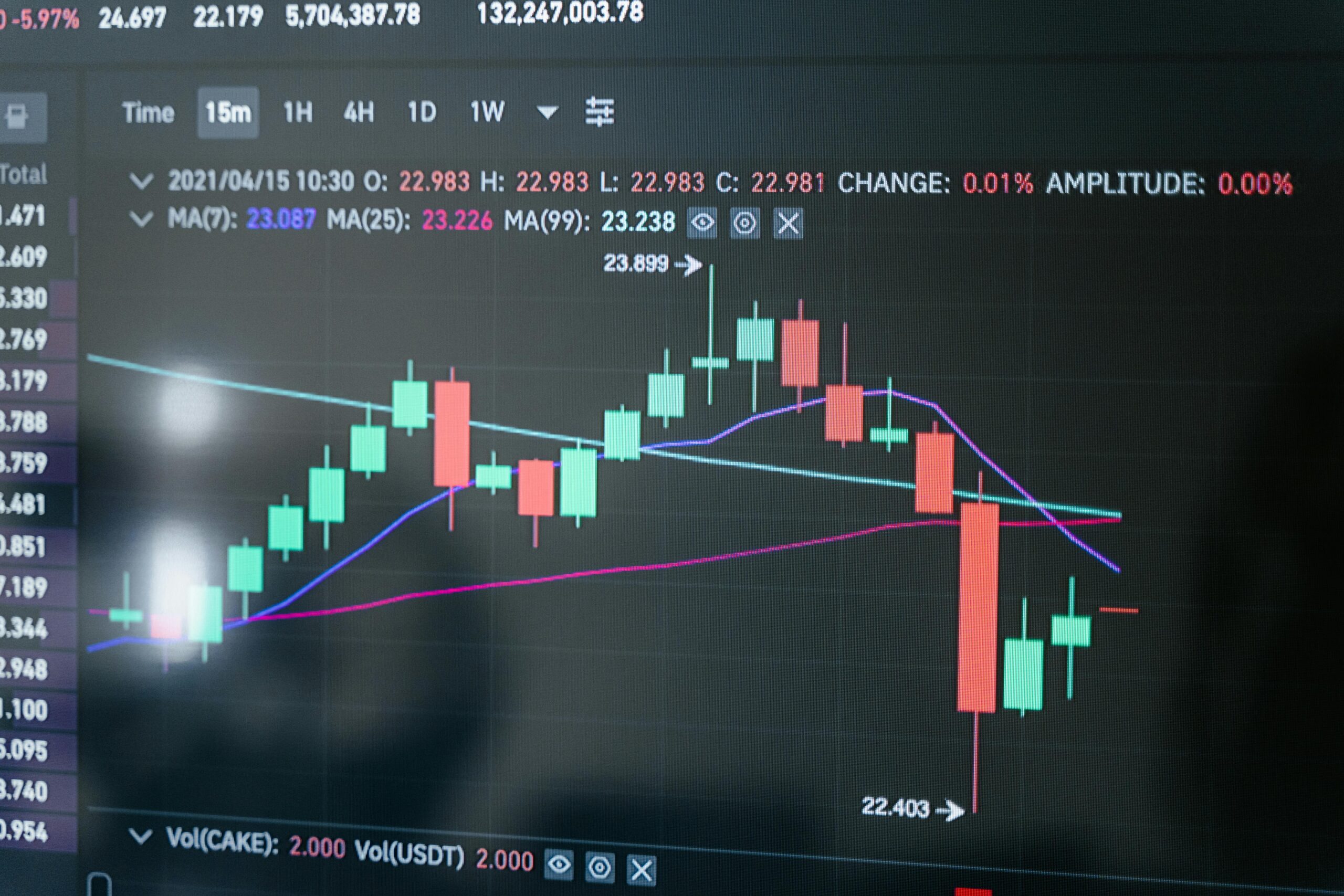
The blockchain revolution has transformed how investors approach digital assets, creating unprecedented opportunities for those who master advanced analytical techniques. Modern quantitative modeling has emerged as the cornerstone of successful blockchain investment strategies.

As cryptocurrency markets mature, traditional investment approaches no longer suffice. Sophisticated investors now leverage mathematical models, statistical analysis, and algorithmic strategies to navigate this volatile yet profitable landscape. Understanding these cutting-edge techniques separates successful blockchain investors from those left behind in the digital gold rush.
🔍 The Foundation of Quantitative Blockchain Analysis
Quantitative modeling in blockchain investments represents a systematic approach to analyzing digital assets using mathematical and statistical methods. Unlike emotional trading decisions, quantitative strategies rely on data-driven insights that remove human bias from the investment equation.
The blockchain ecosystem generates massive amounts of on-chain data every second. Transaction volumes, wallet movements, smart contract interactions, and network activity provide invaluable signals for quantitative models. Successful investors harness this data tsunami to identify patterns invisible to the naked eye.
Modern quantitative frameworks integrate multiple data sources: market prices, trading volumes, blockchain metrics, social sentiment, and macroeconomic indicators. This multi-dimensional approach creates robust models that adapt to changing market conditions while maintaining predictive accuracy.
Core Components of Quantitative Blockchain Models
Every effective quantitative model in blockchain investments consists of several fundamental elements. Data collection mechanisms gather information from exchanges, blockchain networks, and external sources. Data cleaning processes eliminate noise and anomalies that could distort analysis results.
Feature engineering transforms raw data into meaningful variables that models can interpret. This crucial step identifies which metrics truly influence asset prices and which represent mere market noise. Statistical validation ensures that discovered patterns represent genuine market dynamics rather than random coincidences.
Backtesting frameworks allow investors to test strategies against historical data before risking real capital. This validation process reveals how models would have performed under various market conditions, including bull runs, bear markets, and periods of extreme volatility.
📊 Advanced Statistical Techniques for Crypto Markets
Time series analysis forms the backbone of many successful blockchain investment models. These techniques examine how asset prices evolve over time, identifying trends, cycles, and seasonal patterns that repeat across market conditions.
ARIMA models (AutoRegressive Integrated Moving Average) help forecast short-term price movements by analyzing historical patterns. GARCH models (Generalized AutoRegressive Conditional Heteroskedasticity) excel at predicting volatility changes, crucial for risk management in cryptocurrency portfolios.
Machine learning algorithms have revolutionized quantitative blockchain investing. Neural networks can detect complex non-linear relationships between variables that traditional statistical methods might miss. Random forests and gradient boosting machines provide robust predictions while minimizing overfitting risks.
Sentiment Analysis and Alternative Data Sources
Blockchain markets respond dramatically to social sentiment and news events. Advanced natural language processing (NLP) techniques analyze millions of tweets, Reddit posts, and news articles to gauge market mood before price movements occur.
Sentiment indicators complement traditional technical analysis by providing early warning signals. When social sentiment diverges significantly from price action, savvy quantitative investors recognize potential reversal points or continuation patterns.
On-chain metrics offer unique insights unavailable in traditional financial markets. Active addresses, transaction volumes, exchange inflows and outflows, and miner behavior provide direct views into network health and user activity. These blockchain-specific indicators enable predictive models with unprecedented accuracy.
💡 Risk Management Through Quantitative Frameworks
Position sizing represents one of the most critical yet overlooked aspects of blockchain investing. Quantitative models calculate optimal position sizes based on expected returns, volatility estimates, and correlation with other portfolio holdings.
The Kelly Criterion provides a mathematical framework for determining how much capital to allocate to each investment opportunity. This approach maximizes long-term growth while limiting the probability of catastrophic losses that could eliminate an investor’s entire portfolio.
Value at Risk (VaR) calculations estimate the maximum expected loss over a specific time period with a given confidence level. In cryptocurrency markets known for extreme volatility, VaR helps investors understand their downside exposure and adjust positions accordingly.
Portfolio Optimization in Blockchain Ecosystems
Modern portfolio theory adapts beautifully to blockchain investments when properly calibrated for crypto market dynamics. Mean-variance optimization identifies efficient frontiers where investors achieve maximum returns for their chosen risk levels.
However, cryptocurrency correlations change rapidly during market stress periods. Dynamic portfolio optimization models continuously adjust allocations as market conditions evolve, maintaining optimal risk-return profiles even during turbulent periods.
Diversification across blockchain sectors provides additional risk reduction benefits. DeFi protocols, layer-one networks, privacy coins, and NFT platforms respond differently to market catalysts. Quantitative models identify optimal diversification strategies that reduce overall portfolio volatility.
🚀 Algorithmic Trading Strategies for Digital Assets
Momentum strategies capitalize on the tendency of cryptocurrency prices to continue moving in their current direction. Quantitative models identify which assets demonstrate the strongest momentum signals and automatically execute trades when conditions align perfectly.
Mean reversion strategies exploit temporary price dislocations, betting that assets will return to their fair values. These approaches work particularly well in range-bound markets where prices oscillate around established levels without breaking into strong trends.
Statistical arbitrage opportunities emerge frequently in fragmented cryptocurrency markets. Price differences for the same asset across multiple exchanges create profit opportunities for quantitative traders with fast execution capabilities and low transaction costs.
Market Making and Liquidity Provision
Sophisticated quantitative models enable profitable market making in decentralized finance protocols. By continuously providing liquidity and earning fees, these strategies generate steady returns while simultaneously reducing overall market volatility.
Automated market makers (AMMs) in DeFi platforms present unique opportunities for quantitative investors. Models optimize liquidity provision ranges, rebalancing frequencies, and impermanent loss mitigation strategies to maximize risk-adjusted returns.
Flash loan arbitrage represents an advanced quantitative strategy exclusive to blockchain markets. These zero-capital trades exploit temporary price inefficiencies across multiple protocols within a single transaction, generating profits impossible in traditional finance.
📈 Building Robust Predictive Models
Feature selection determines model performance more than algorithm choice. Quantitative blockchain investors carefully test hundreds of potential variables to identify those with genuine predictive power rather than spurious correlations.
Cross-validation techniques prevent overfitting by testing models on data they haven’t seen during training. Walk-forward analysis simulates real trading conditions by continuously retraining models as new data becomes available, ensuring strategies remain effective over time.
Ensemble methods combine multiple models to create more robust predictions. By aggregating insights from different algorithms and approaches, investors reduce the risk that any single model’s weaknesses will undermine overall performance.
Handling Regime Changes in Crypto Markets
Cryptocurrency markets experience distinct regimes with different characteristics. Bull markets, bear markets, and consolidation periods each require adapted strategies. Hidden Markov Models help identify regime transitions before they become obvious to market participants.
Adaptive algorithms automatically adjust parameters based on current market conditions. These self-optimizing systems maintain effectiveness across multiple market environments without requiring constant manual intervention.
Stress testing evaluates model performance during extreme scenarios that haven’t occurred in historical data. This forward-looking risk assessment ensures strategies can survive black swan events that inevitably occur in volatile blockchain markets.
🔐 Technology Infrastructure for Quantitative Trading
Successful quantitative blockchain investing requires robust technological infrastructure. Low-latency data feeds provide real-time market information necessary for timely decision-making. Cloud computing resources enable complex calculations at scale without prohibitive hardware investments.
API integrations with multiple exchanges and blockchain networks allow seamless trade execution and portfolio monitoring. Reliable infrastructure minimizes slippage and ensures orders execute at intended prices, protecting profit margins in competitive markets.
Security considerations cannot be overlooked when implementing quantitative strategies. Private keys, API credentials, and proprietary algorithms require enterprise-grade protection against theft and unauthorized access.
Continuous Learning and Model Improvement
Blockchain markets evolve rapidly as new technologies emerge and regulatory landscapes shift. Successful quantitative investors maintain continuous learning processes that update models with new data and incorporate fresh insights from ongoing research.
Performance monitoring systems track every aspect of model behavior, identifying degradation before it significantly impacts returns. Automated alerts notify investors when key metrics deviate from expected ranges, enabling prompt corrective action.
Community engagement through open-source projects and academic collaboration accelerates innovation. Many cutting-edge quantitative techniques emerge from collaborative research that benefits the entire blockchain investing community.
🎯 Practical Implementation Strategies
Beginning quantitative blockchain investors should start with simple strategies before progressing to complex models. Moving average crossovers and basic momentum indicators provide excellent learning opportunities while generating modest returns that compound over time.
Paper trading allows risk-free testing of quantitative strategies before committing real capital. This practice phase reveals implementation challenges and provides valuable experience without financial consequences when mistakes occur.
Gradual capital allocation protects against unforeseen issues during strategy deployment. Starting with small positions and slowly increasing exposure as confidence grows minimizes the impact of unexpected model behaviors or market conditions.
Common Pitfalls to Avoid
Overfitting represents the most common mistake among novice quantitative investors. Creating excessively complex models that perfectly explain historical data but fail to predict future movements wastes time and capital.
Transaction costs significantly impact profitability, especially for high-frequency strategies. Models must account for exchange fees, network gas costs, and slippage when calculating expected returns, or they’ll promise profits that never materialize in practice.
Survivorship bias distorts backtests when failed projects are excluded from historical analysis. Comprehensive datasets including delisted tokens provide more realistic performance expectations than sanitized data showing only successful projects.

🌟 The Future of Quantitative Blockchain Investing
Artificial intelligence integration will revolutionize quantitative blockchain strategies. Deep learning models already demonstrate superior pattern recognition capabilities, and reinforcement learning enables algorithms that improve through market interaction.
Quantum computing may eventually transform computational possibilities for blockchain investment models. Complex optimization problems that currently require hours or days might solve in seconds, enabling entirely new categories of quantitative strategies.
Decentralized autonomous organizations (DAOs) governed by quantitative models represent an emerging frontier. Community-owned investment funds managed by transparent algorithms could democratize access to sophisticated strategies previously available only to wealthy investors.
Cross-chain analytics will become increasingly important as blockchain ecosystems grow more interconnected. Models analyzing relationships between different networks will identify opportunities invisible when examining individual blockchains in isolation.
Regulatory clarity will enable institutional capital to flow into quantitative blockchain strategies at unprecedented scale. This professionalization brings both opportunities and increased competition, rewarding investors who continuously innovate and refine their approaches.
The convergence of traditional finance and blockchain markets creates hybrid opportunities. Quantitative models incorporating both on-chain data and traditional financial indicators position investors to capitalize on this merging landscape.
Mastering quantitative modeling for blockchain investments requires dedication, continuous learning, and technological sophistication. Those who develop these skills position themselves at the forefront of financial innovation, capturing opportunities that redefine wealth creation in the digital age. Success belongs to investors who combine mathematical rigor with deep understanding of blockchain technology, creating strategies that thrive in this revolutionary market.