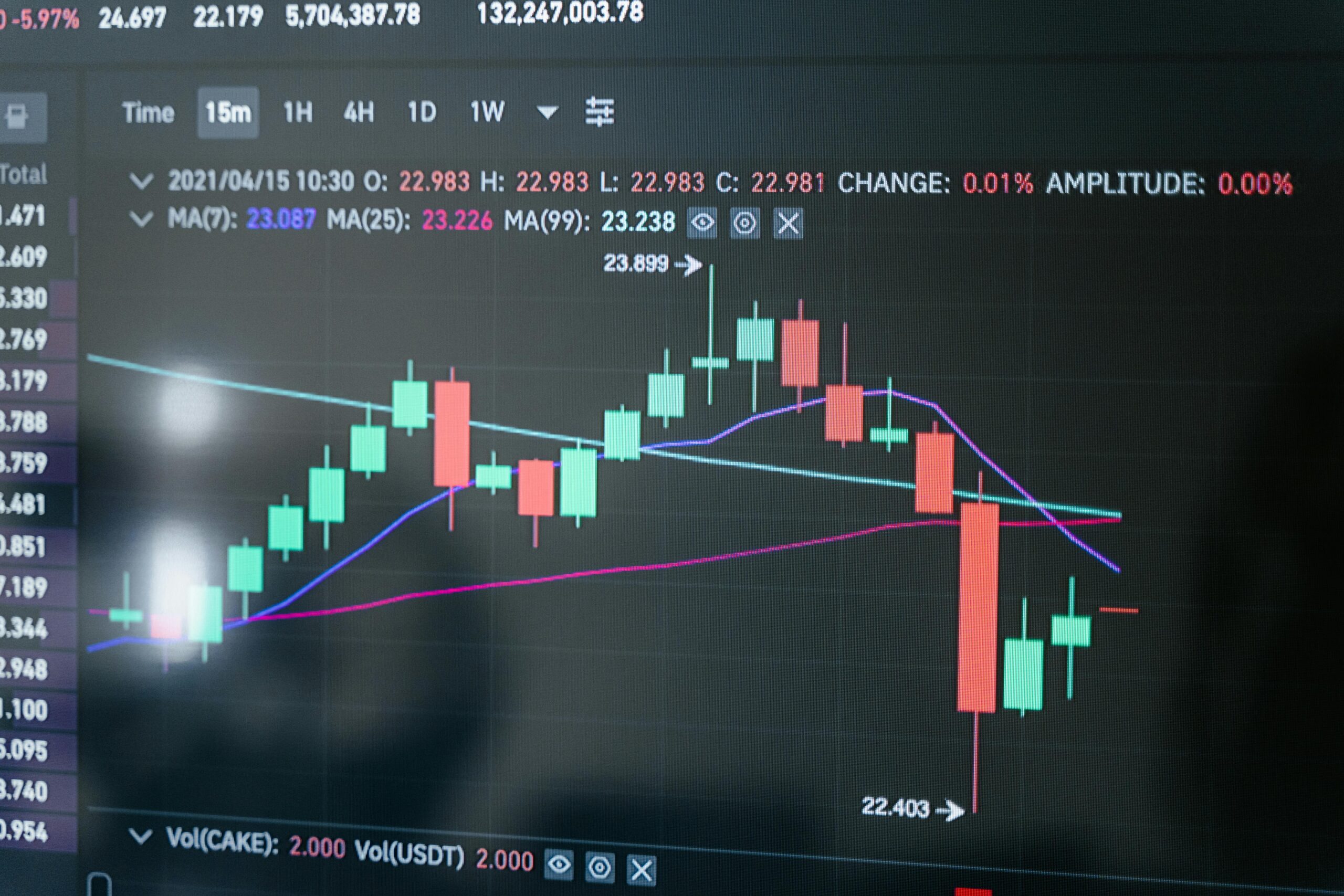
The financial landscape is undergoing a seismic shift as artificial intelligence transforms how we make investment decisions and manage wealth accumulation strategies.

Traditional investment approaches that relied solely on human intuition and historical data analysis are rapidly being augmented—and in some cases replaced—by sophisticated AI-powered systems capable of processing vast amounts of information in milliseconds. This technological revolution isn’t just changing the game for institutional investors and hedge funds; it’s democratizing access to advanced financial tools that were once exclusively available to the wealthy elite. From algorithmic trading platforms to robo-advisors and predictive analytics engines, AI is reshaping every aspect of wealth management and creating unprecedented opportunities for investors at all levels.
The Dawn of Intelligent Investment Management 🚀
Artificial intelligence has fundamentally altered the investment landscape by introducing capabilities that far exceed human limitations in data processing and pattern recognition. Modern AI-powered investment systems can simultaneously analyze thousands of data points—from market sentiment on social media to satellite imagery of retail parking lots—to identify investment opportunities that would be impossible for human analysts to spot manually.
These systems leverage machine learning algorithms that continuously improve their performance by learning from past decisions and market movements. Unlike traditional investment approaches that rely on static rules and periodic updates, AI systems adapt in real-time to changing market conditions, adjusting portfolios dynamically to optimize returns while managing risk exposure.
The integration of natural language processing enables these platforms to digest earnings reports, news articles, and regulatory filings instantly, extracting relevant insights that inform investment decisions. This speed advantage means AI-powered systems can react to market-moving information seconds after it becomes available, potentially capturing value before traditional investors even become aware of new developments.
Breaking Down the Technology Behind Smarter Wealth Building
Understanding how AI-powered investment systems work demystifies their capabilities and helps investors make informed decisions about incorporating these tools into their financial strategies. At their core, these systems utilize several key technologies working in concert to deliver superior investment outcomes.
Machine Learning and Predictive Analytics
Machine learning algorithms form the foundation of modern AI investment systems. These algorithms analyze historical market data, identifying patterns and correlations that predict future price movements with increasing accuracy. Unlike traditional technical analysis that relies on predetermined indicators, machine learning models discover their own predictive features through exposure to vast datasets.
Deep learning neural networks, inspired by the human brain’s structure, can process unstructured data like images, text, and audio to extract investment-relevant insights. For example, sentiment analysis algorithms can gauge market mood by analyzing millions of social media posts, news articles, and financial blog content to predict short-term price movements with remarkable precision.
Portfolio Optimization Algorithms
AI-driven portfolio optimization goes far beyond traditional mean-variance optimization introduced by Harry Markowitz. Modern systems incorporate multiple objectives simultaneously—maximizing returns, minimizing volatility, reducing drawdowns, optimizing tax efficiency, and aligning with ESG preferences—while accounting for real-world constraints like transaction costs and liquidity requirements.
These algorithms continuously rebalance portfolios based on changing market conditions and evolving investor circumstances. By processing real-time data feeds and recalculating optimal allocations thousands of times per day, AI systems maintain portfolios that consistently align with investment objectives even as markets fluctuate.
Practical Applications Transforming Personal Finance 💡
The theoretical advantages of AI-powered investment systems translate into tangible benefits for everyday investors seeking to build and preserve wealth more effectively. These applications span the entire spectrum of financial decision-making, from initial investment selection to ongoing portfolio management and risk monitoring.
Robo-Advisors and Automated Wealth Management
Robo-advisors represent the most accessible entry point for individual investors looking to harness AI-powered investment capabilities. These platforms use algorithms to create and manage diversified portfolios tailored to each investor’s risk tolerance, time horizon, and financial goals—all at a fraction of the cost charged by traditional financial advisors.
Leading robo-advisory platforms employ tax-loss harvesting algorithms that automatically identify opportunities to sell securities at a loss to offset capital gains, potentially saving investors thousands of dollars annually. This level of tax optimization was previously available only to high-net-worth individuals working with sophisticated wealth management firms.
Intelligent Stock Selection and Screening
AI-powered stock screening tools analyze thousands of companies simultaneously across hundreds of fundamental and technical criteria to identify investment opportunities matching specific parameters. These systems can detect subtle patterns in financial statements that might indicate accounting irregularities or undiscovered growth potential long before human analysts spot them.
Alternative data analysis represents a particularly powerful application of AI in stock selection. By analyzing credit card transaction data, web traffic patterns, app download statistics, and other non-traditional information sources, AI systems can forecast company performance before official earnings announcements, providing investors with an informational edge.
Risk Management and Downside Protection
Perhaps the most valuable contribution of AI to investment decision-making lies in enhanced risk management capabilities. AI systems can model thousands of potential market scenarios simultaneously, assessing how portfolios might perform under various economic conditions and geopolitical events. This comprehensive risk analysis enables investors to make more informed decisions about position sizing and hedging strategies.
Real-time anomaly detection algorithms continuously monitor market conditions and portfolio behavior, alerting investors to unusual patterns that might signal emerging risks. These early warning systems can help investors avoid significant losses by identifying problems before they fully materialize in market prices.
Comparing Traditional and AI-Enhanced Investment Approaches
To appreciate the revolutionary impact of AI on wealth management, it’s helpful to examine how these systems compare to traditional investment methodologies across key dimensions:
| Dimension | Traditional Approach | AI-Powered Systems |
|---|---|---|
| Data Processing Capacity | Limited to human analyst bandwidth | Processes millions of data points simultaneously |
| Reaction Speed | Hours to days for decision implementation | Milliseconds to seconds for execution |
| Emotional Influence | Subject to fear, greed, and cognitive biases | Purely data-driven, emotion-free decisions |
| Cost Structure | 1-2% annual management fees typical | 0.25-0.50% for robo-advisors |
| Consistency | Varies based on analyst mood and circumstances | Consistent application of investment rules |
| Learning Capability | Limited by individual experience | Continuous improvement from all market data |
This comparison illustrates why AI-powered systems are gaining market share rapidly. They offer superior capabilities across most dimensions that matter for investment success, while simultaneously reducing costs and eliminating emotional decision-making that often undermines long-term returns.
Navigating the Challenges and Limitations ⚠️
Despite their impressive capabilities, AI-powered investment systems are not without limitations and challenges that investors must understand before entrusting significant wealth to these platforms. A balanced perspective requires acknowledging both the transformative potential and the realistic constraints of this technology.
The Black Box Problem
Many sophisticated AI systems operate as “black boxes,” making decisions through complex neural networks whose reasoning processes are difficult or impossible for humans to interpret. This lack of transparency can be unsettling for investors who want to understand exactly why their portfolios are allocated in particular ways. When AI systems make counterintuitive recommendations, the inability to explain the underlying logic can undermine investor confidence and lead to premature abandonment of sound strategies.
Overfitting and Market Regime Changes
Machine learning models can suffer from overfitting—becoming so finely tuned to historical data patterns that they fail to generalize to new market conditions. This challenge is particularly acute during regime changes when market dynamics shift fundamentally, such as transitions from low to high inflation environments or the emergence of entirely new asset classes like cryptocurrencies.
AI systems trained primarily on data from bull markets may struggle when confronted with sustained downturns characterized by different correlation structures and volatility patterns. Investors must recognize that past performance of AI models, like any investment strategy, doesn’t guarantee future results.
Data Quality and Availability
The old computer science adage “garbage in, garbage out” applies fully to AI-powered investment systems. These platforms are only as good as the data they consume, and data quality issues—ranging from simple errors to systematic biases—can lead to flawed investment decisions. Additionally, AI systems may struggle with rare events for which limited historical data exists, potentially leaving portfolios vulnerable to tail risks.
Practical Steps to Leverage AI for Your Investment Strategy
For investors ready to incorporate AI-powered tools into their wealth-building approach, following a structured implementation process maximizes the likelihood of success while managing potential pitfalls.
Start with Clear Investment Objectives
Before selecting any AI-powered investment platform, clearly define your financial goals, risk tolerance, time horizon, and any specific preferences or constraints. AI systems work best when given precise objectives to optimize for, so the clearer you are about what you want to achieve, the better the system can serve your needs.
Consider whether you’re investing for retirement decades away, saving for a home purchase in five years, or seeking to generate current income. Different AI platforms specialize in different investment approaches, and matching your objectives to the right system is crucial for success.
Evaluate Platform Capabilities and Track Records
Not all AI-powered investment platforms are created equal. Research potential platforms thoroughly, examining their methodologies, historical performance across different market conditions, fee structures, and the credentials of the teams behind them. Look for platforms that provide transparency about their approaches and can explain their investment philosophies in understandable terms.
Pay particular attention to how platforms performed during market downturns. Systems that generate strong returns during bull markets but fail to protect capital during corrections may not provide the risk-adjusted returns you need for long-term wealth building.
Implement Gradually with Appropriate Position Sizing
Rather than immediately transferring your entire portfolio to an AI-powered system, consider a gradual implementation approach. Start with a meaningful but not life-changing allocation—perhaps 10-25% of your investable assets—and monitor performance over at least one complete market cycle before increasing exposure.
This measured approach allows you to build confidence in the system’s capabilities while limiting your exposure to potential weaknesses you couldn’t identify during initial due diligence. It also gives you time to become comfortable with the platform’s interface and decision-making patterns.
Maintain Strategic Oversight
While AI systems can handle tactical portfolio management more effectively than most human investors, you should maintain strategic oversight of your overall financial plan. Periodically review whether your AI-managed portfolio remains aligned with your evolving life circumstances, adjusting inputs as needed when major life changes occur.
Think of AI systems as powerful tools that augment rather than replace human judgment. The most successful investors combine AI’s superior data processing and emotion-free execution with human wisdom about life goals, values, and the bigger picture that purely quantitative systems cannot fully capture.
The Future Landscape of AI-Driven Wealth Management 🔮
As artificial intelligence continues advancing at an exponential pace, the capabilities of investment decision systems will expand dramatically in coming years. Several emerging trends point toward an even more transformative future for AI in wealth management.
Quantum computing promises to revolutionize portfolio optimization by solving complex allocation problems that are currently computationally intractable. When quantum computers become commercially viable for financial applications, AI systems will be able to model market scenarios and optimize portfolios with unprecedented sophistication.
The integration of AI with blockchain technology and decentralized finance protocols will create entirely new categories of investment opportunities and risk management tools. Smart contracts executed by AI systems could automatically implement sophisticated hedging strategies or rebalance portfolios based on real-time market conditions without human intervention.
Personalization will reach new heights as AI systems incorporate increasingly granular data about individual investors’ circumstances, preferences, and even personality traits. Future platforms may adjust not just portfolio allocations but also communication styles and engagement frequency based on behavioral analytics that predict when each investor most needs guidance or reassurance.
Democratizing Access to Sophisticated Financial Intelligence
Perhaps the most profound impact of AI-powered investment systems is their role in democratizing access to sophisticated financial capabilities previously reserved for institutional investors and the ultra-wealthy. Retail investors with modest account balances can now access portfolio optimization algorithms, alternative data insights, and tax management strategies that rival those employed by major hedge funds.
This leveling of the playing field has significant implications for wealth inequality and financial inclusion. As AI-powered platforms continue improving while simultaneously becoming more affordable, the gap between investment returns achieved by sophisticated and unsophisticated investors should narrow, potentially enabling more people to build meaningful wealth over their lifetimes.
Educational integration represents another democratizing force, as AI systems that manage investments can simultaneously teach users about financial concepts through personalized lessons tailored to each investor’s knowledge level and learning style. This combination of automated wealth management with financial education could dramatically improve financial literacy across entire populations.

Making Your Move Toward Smarter Financial Growth
The revolution in AI-powered investment decision-making is not a distant future possibility—it’s happening right now, and investors who embrace these tools thoughtfully position themselves to achieve superior financial outcomes. The key is approaching this technology with informed enthusiasm rather than uncritical acceptance or fearful rejection.
Begin by educating yourself about the capabilities and limitations of AI in investment management. Experiment with platforms that offer low-cost or free trials, allowing you to experience how these systems work without risking significant capital. As you build understanding and confidence, gradually increase your reliance on AI-powered tools while maintaining appropriate human oversight.
Remember that AI investment systems are tools designed to enhance your decision-making, not replace your involvement in managing your financial future. The investors who will benefit most from this technological revolution are those who thoughtfully combine AI’s computational power with human wisdom about what truly matters in life. By leveraging artificial intelligence to handle data-intensive analytical tasks while you focus on strategic life planning and goal-setting, you can achieve a powerful synergy that maximizes your potential for long-term wealth creation.
The future of wealth management has arrived, powered by artificial intelligence that makes sophisticated investment strategies accessible to everyone. Whether you’re just beginning your investment journey or seeking to optimize a mature portfolio, AI-powered decision systems offer unprecedented opportunities to revolutionize your approach to financial growth and achieve the prosperity you deserve.