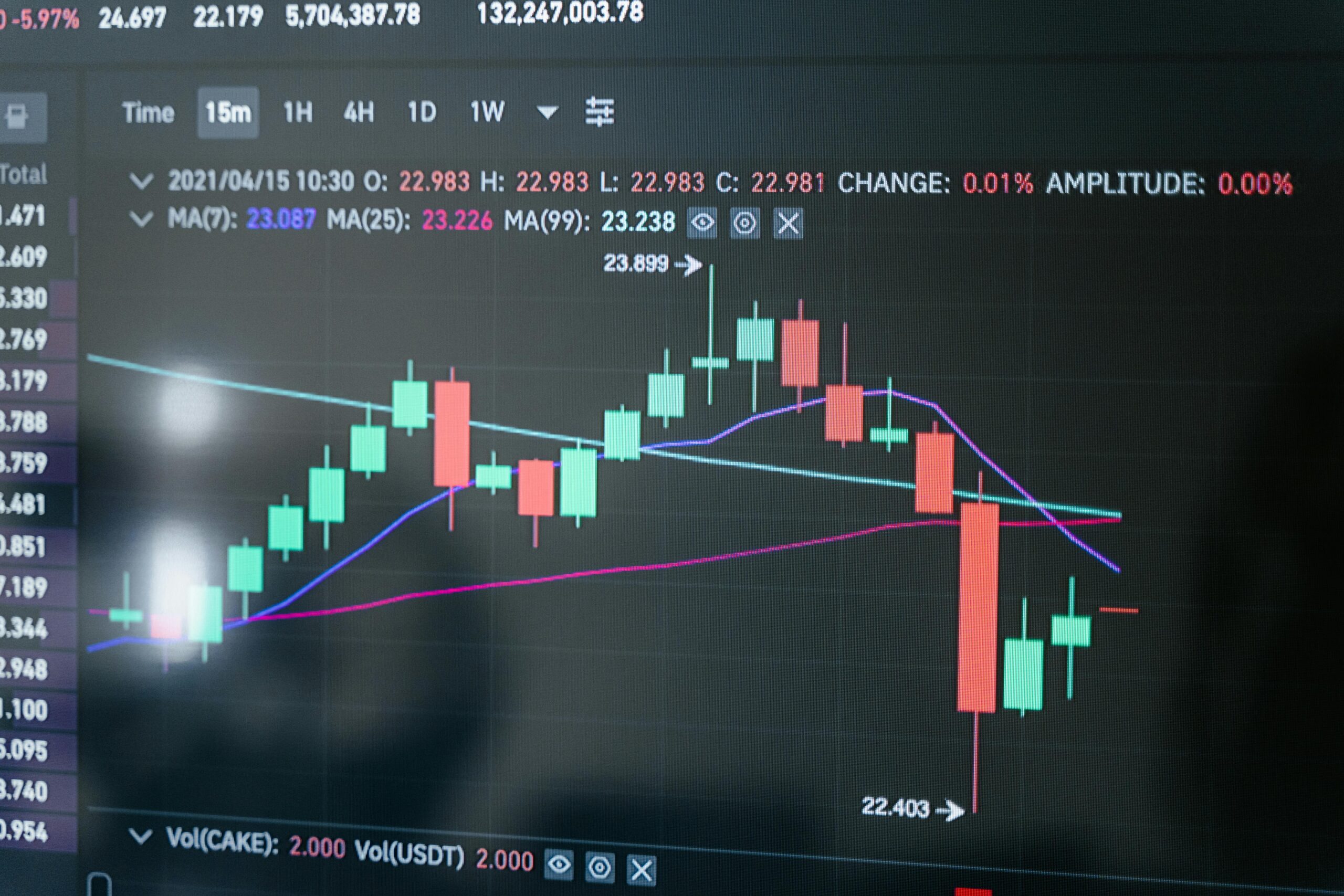
The intersection of machine learning and market forecasting represents one of the most transformative developments in modern business intelligence. Organizations worldwide are discovering unprecedented opportunities to predict trends, minimize risks, and capitalize on emerging patterns.

Traditional forecasting methods, while valuable for decades, are increasingly inadequate in our data-saturated world. Machine learning algorithms process vast datasets at speeds impossible for human analysts, uncovering hidden correlations and delivering actionable insights that drive competitive advantage in today’s volatile markets.
🚀 The Evolution from Traditional to Intelligent Forecasting
Market forecasting has traveled an extraordinary journey from simple statistical models to sophisticated artificial intelligence systems. Historical approaches relied heavily on linear regression, moving averages, and human intuition—methods that struggled with the complexity and velocity of modern market dynamics.
Machine learning fundamentally reshapes this landscape by introducing adaptive algorithms that learn from historical patterns while continuously refining their predictive capabilities. Unlike static models, these systems evolve with market conditions, identifying non-linear relationships that traditional methods simply cannot detect.
The transformation extends beyond mere computational power. Machine learning systems integrate diverse data sources—from social media sentiment and satellite imagery to transaction records and weather patterns—creating multidimensional forecasting models that capture market reality with unprecedented accuracy.
Understanding the Core Technologies Behind Predictive Analytics
Several machine learning approaches have proven particularly effective for market forecasting applications. Supervised learning algorithms, including random forests and gradient boosting machines, excel at identifying patterns when historical outcomes are available for training purposes.
Deep learning neural networks represent another powerful tool, particularly for processing unstructured data like news articles, earnings call transcripts, and customer reviews. These networks automatically extract relevant features from raw information, eliminating the need for manual feature engineering that plagued earlier approaches.
Time series models specifically designed for sequential data—such as LSTM networks and transformer architectures—capture temporal dependencies that influence market movements. These models recognize that market conditions unfold across time, with past events creating ripple effects that shape future outcomes.
Natural Language Processing: Decoding Market Sentiment
Natural language processing (NLP) has emerged as a game-changing component of modern forecasting systems. By analyzing earnings reports, social media discussions, news coverage, and analyst commentary, NLP algorithms quantify market sentiment and detect emerging narratives before they manifest in price movements.
Sentiment analysis tools process millions of documents daily, assigning numerical scores to qualitative information. This transformation of unstructured text into actionable data points enables forecasting models to incorporate human psychology and collective market mood—factors that traditional quantitative approaches historically missed.
💡 Real-World Applications Transforming Industries
Financial services institutions have pioneered machine learning adoption for market forecasting, deploying algorithms that predict stock prices, currency fluctuations, and commodity trends. Hedge funds and investment banks leverage these systems to execute trades microseconds faster than competitors, capturing profit opportunities that disappear almost instantly.
Retail organizations harness machine learning to forecast demand with remarkable precision, optimizing inventory levels and reducing waste. By analyzing purchasing patterns, seasonal trends, weather forecasts, and promotional impacts, retailers ensure products arrive at the right locations in optimal quantities.
Supply chain management has been revolutionized through predictive analytics that anticipate disruptions before they occur. Machine learning models analyze transportation data, geopolitical events, supplier health indicators, and economic factors to recommend proactive adjustments that maintain operational continuity.
Energy Sector Optimization
Energy companies employ machine learning forecasting to predict consumption patterns, renewable energy production, and grid load requirements. These predictions enable more efficient resource allocation, reduce operational costs, and support the integration of intermittent renewable sources into power networks.
Wind and solar energy producers particularly benefit from machine learning systems that forecast generation capacity hours or days in advance, allowing grid operators to balance supply and demand more effectively while maximizing renewable energy utilization.
Building Robust Machine Learning Forecasting Systems
Successful implementation requires careful attention to data quality, model selection, and validation procedures. The foundation of any effective system lies in comprehensive, accurate, and representative training data that captures the full range of market conditions the model will encounter.
Data preprocessing represents a critical phase where raw information is cleaned, normalized, and transformed into formats suitable for machine learning algorithms. Missing values must be addressed, outliers investigated, and relevant features engineered to maximize predictive power.
Model selection demands understanding the specific forecasting challenge at hand. Different algorithms excel under different circumstances—ensemble methods often outperform single models, combining multiple approaches to leverage their complementary strengths while mitigating individual weaknesses.
Validation and Performance Monitoring
Rigorous validation procedures prevent overfitting—the tendency for models to memorize training data rather than learn generalizable patterns. Cross-validation techniques, holdout test sets, and walk-forward analysis ensure models perform reliably on unseen data representing future market conditions.
Continuous monitoring after deployment is equally essential. Market dynamics evolve constantly, and model performance inevitably degrades over time. Automated monitoring systems detect performance deterioration, triggering retraining protocols that maintain forecasting accuracy.
📊 Key Performance Metrics for Forecasting Models
Evaluating forecasting accuracy requires appropriate metrics that align with business objectives. Mean absolute error (MAE) and root mean squared error (RMSE) quantify prediction accuracy in the same units as the forecasted variable, providing intuitive measures of model performance.
For directional predictions—forecasting whether markets will rise or fall—classification metrics like precision, recall, and F1-scores become relevant. These measures evaluate how accurately models predict directional movements, which often matters more than precise magnitude predictions.
| Metric | Purpose | Best Use Case |
|---|---|---|
| MAE | Average absolute prediction error | General accuracy assessment |
| RMSE | Penalizes larger errors more heavily | When large errors are costly |
| MAPE | Percentage-based error measurement | Comparing across different scales |
| Directional Accuracy | Correct prediction of movement direction | Trading and investment decisions |
Overcoming Common Implementation Challenges
Data availability and quality pose significant obstacles for organizations beginning their machine learning journey. Historical records may be incomplete, inconsistent across systems, or contain errors that compromise model training. Establishing robust data governance frameworks addresses these challenges systematically.
The “black box” nature of complex machine learning models creates interpretability concerns, particularly in regulated industries where decision transparency is mandatory. Explainable AI techniques—including SHAP values and LIME—help stakeholders understand how models arrive at specific predictions, building trust and facilitating adoption.
Computational requirements for training sophisticated models can be substantial, demanding significant infrastructure investments. Cloud-based machine learning platforms democratize access to necessary computing resources, enabling organizations of all sizes to develop advanced forecasting capabilities without massive capital expenditures.
Addressing Bias and Ethical Considerations
Machine learning models can inadvertently perpetuate biases present in training data, leading to systematically skewed predictions that disadvantage certain market segments. Careful data auditing, diverse training sets, and fairness-aware algorithms help mitigate these risks and ensure equitable forecasting outcomes.
Ethical considerations extend to how forecasting insights are applied. Predictive models that identify vulnerable customer segments could be exploited for predatory practices. Establishing clear ethical guidelines and governance structures ensures machine learning capabilities serve legitimate business purposes while respecting stakeholder interests.
🎯 Strategic Decision-Making Enhanced by Predictive Intelligence
Machine learning forecasting transforms strategic planning by replacing gut instinct with data-driven confidence. Executives equipped with reliable predictions can allocate resources more effectively, entering markets at optimal times and avoiding investments in declining sectors.
Risk management capabilities improve dramatically when organizations can anticipate adverse scenarios before they materialize. Forecasting models identify early warning signals—subtle pattern shifts that precede major market movements—enabling proactive rather than reactive responses to emerging threats.
Competitive advantage increasingly depends on forecasting accuracy. Organizations that correctly anticipate customer preferences, supply chain disruptions, or regulatory changes gain first-mover advantages that compound over time, creating market positions difficult for competitors to challenge.
Personalizing Customer Experiences
Forecasting extends beyond aggregate market trends to individual customer behavior prediction. Machine learning models anticipate when customers are likely to make purchases, which products will appeal to specific individuals, and who faces elevated churn risk.
These individual-level predictions enable personalized marketing campaigns, customized product recommendations, and targeted retention efforts that dramatically improve conversion rates and customer lifetime value. The result is more efficient marketing spend delivering superior outcomes.
Integration with Business Intelligence Ecosystems
Maximum value emerges when machine learning forecasting integrates seamlessly with existing business intelligence infrastructure. Predictions should flow automatically into dashboards, reports, and decision support systems where stakeholders consume information and take action.
API-based architectures enable forecasting models to serve predictions to multiple downstream applications—from inventory management systems and pricing engines to customer relationship platforms and financial planning tools. This integration ensures consistent, real-time forecasting across the enterprise.
Collaboration between data scientists and domain experts is essential for successful integration. Technical specialists build and maintain models, while business stakeholders provide context, validate outputs, and translate predictions into operational decisions that drive measurable outcomes.
🔮 Emerging Trends Shaping the Future of Market Forecasting
Automated machine learning (AutoML) platforms are democratizing access to sophisticated forecasting capabilities. These systems automatically select optimal algorithms, tune hyperparameters, and engineer features, reducing the specialized expertise required to build effective models.
Federated learning enables collaborative model training across organizations without sharing sensitive data. Multiple parties contribute to model development while maintaining data privacy, creating forecasting systems that leverage broader information sources than any single organization could access independently.
Quantum computing promises to revolutionize optimization problems central to market forecasting. While practical applications remain nascent, quantum algorithms may eventually solve complex forecasting challenges that overwhelm classical computing approaches, opening entirely new frontiers in predictive accuracy.
Real-Time Adaptive Forecasting
The future belongs to forecasting systems that update continuously as new information arrives, rather than periodic batch retraining. Streaming machine learning architectures process data in real-time, instantly incorporating breaking news, transaction flows, and market movements into updated predictions.
These adaptive systems respond immediately to regime changes—fundamental shifts in market behavior that render historical patterns obsolete. By detecting and adjusting to regime changes automatically, next-generation forecasting maintains accuracy through market volatility that cripples traditional approaches.
Practical Steps for Getting Started
Organizations beginning their machine learning forecasting journey should start with clearly defined business problems where predictive insights deliver measurable value. Pilot projects focused on specific forecasting challenges build capabilities while demonstrating ROI that justifies expanded investment.
Building internal expertise requires strategic hiring combined with upskilling existing talent. Data scientists, machine learning engineers, and analytics translators who bridge technical and business domains form the core team necessary for sustained success.
Partnerships with technology vendors, consultancies, and academic institutions accelerate capability development. External expertise complements internal resources during initial phases, transferring knowledge while delivering immediate forecasting value.
- Establish clear forecasting objectives aligned with strategic priorities
- Audit existing data assets and identify gaps requiring remediation
- Select appropriate tools and platforms matching organizational scale and requirements
- Develop governance frameworks addressing ethics, privacy, and model risk
- Create feedback loops connecting predictions to outcomes for continuous improvement
- Invest in change management ensuring stakeholders trust and utilize forecasting insights
Measuring Return on Investment
Quantifying machine learning forecasting value requires connecting predictions to business outcomes. Improved forecast accuracy should translate into measurable benefits—reduced inventory costs, increased revenue, lower risk exposure, or enhanced customer satisfaction.
Establishing baseline metrics before implementation enables objective assessment of forecasting impact. Comparing performance before and after deployment isolates the contribution of machine learning systems, demonstrating value to skeptical stakeholders and justifying continued investment.
The most successful implementations view machine learning forecasting as ongoing capability development rather than one-time projects. Continuous refinement, expanding applications, and cumulative learning compound value over time, creating sustainable competitive advantages.

🌟 Transforming Uncertainty into Opportunity
Machine learning fundamentally alters humanity’s relationship with the future, transforming market forecasting from educated guesswork into rigorous science. Organizations that embrace these capabilities position themselves to thrive amid complexity and volatility that paralyze competitors lacking predictive intelligence.
The journey requires commitment, investment, and cultural transformation. Technical infrastructure alone proves insufficient without organizational readiness to act on forecasting insights, challenging established practices and conventional wisdom when data suggests alternative approaches.
Those who successfully harness machine learning for market forecasting gain more than competitive advantage—they unlock fundamentally different ways of seeing markets, understanding customers, and making decisions. The future belongs to organizations that replace reactive responses with proactive strategies informed by predictive intelligence that turns uncertainty into strategic opportunity.