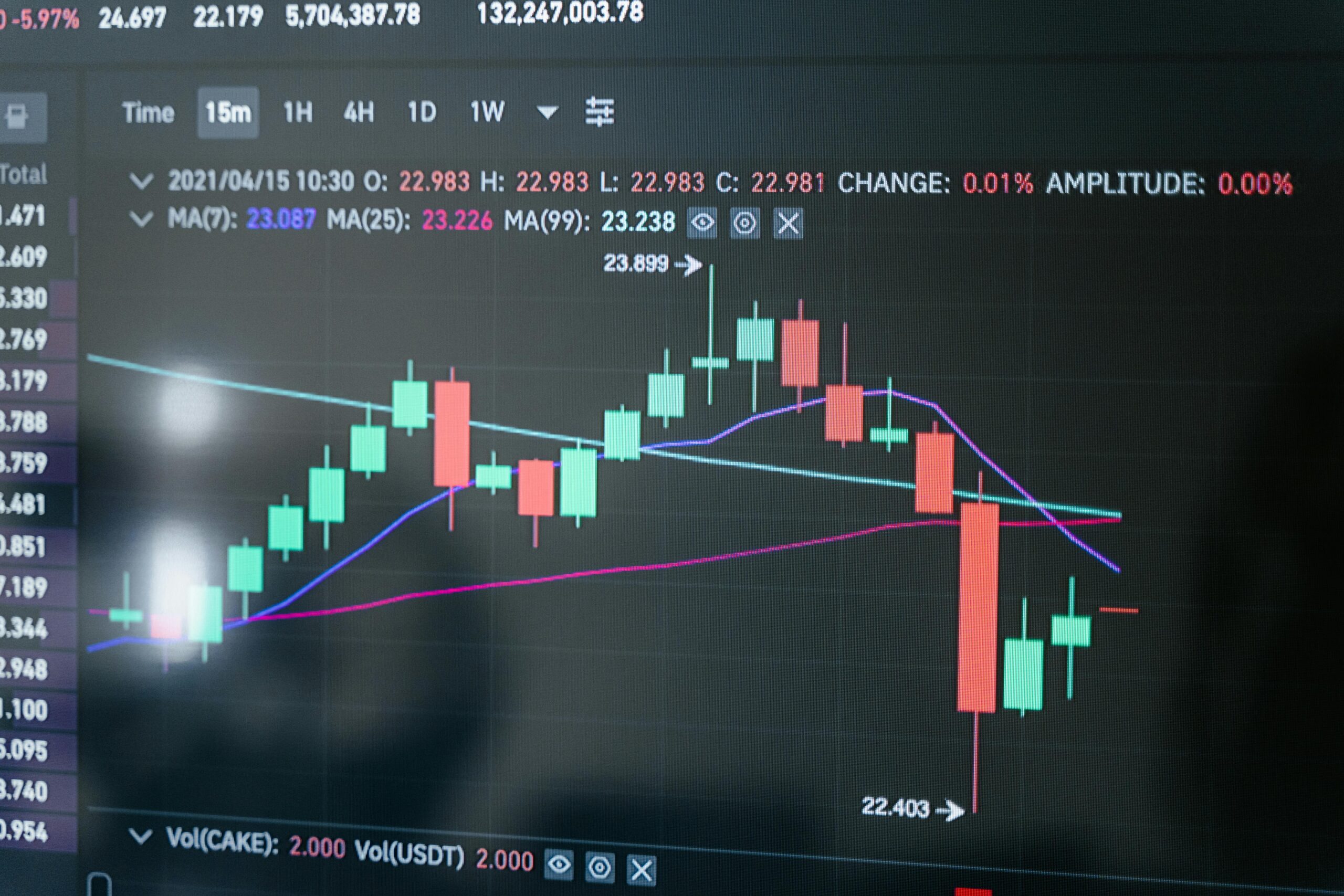
The financial markets have always been a fascinating arena where logic meets emotion, and data intersects with human intuition. Understanding how investors think, react, and make decisions can be the difference between consistent success and recurring losses in today’s complex trading environment.

Behavioral finance has emerged as a revolutionary field that bridges psychology and economics, challenging the traditional notion that markets are perfectly rational. By recognizing the cognitive biases and emotional triggers that influence investment decisions, traders and investors can develop a significant competitive advantage in navigating market volatility and building sustainable wealth.
🧠 The Foundation of Behavioral Finance
Traditional financial theory has long operated under the assumption that investors are rational actors who consistently make logical decisions to maximize their returns. However, decades of research and real-world market behavior have demonstrated that human psychology plays a far more significant role in financial markets than previously acknowledged.
Behavioral finance emerged in the late 20th century through the groundbreaking work of psychologists Daniel Kahneman and Amos Tversky. Their prospect theory revealed that people value gains and losses differently, leading to inconsistent decision-making patterns. This discovery earned Kahneman the Nobel Prize in Economics and fundamentally transformed how we understand market dynamics.
The core principle underlying behavioral finance is simple yet profound: investors are human beings subject to emotions, biases, and cognitive limitations. These psychological factors systematically influence how we perceive risk, evaluate opportunities, and ultimately execute our investment strategies. Recognizing these patterns allows us to anticipate market movements that purely quantitative models might miss.
Common Cognitive Biases That Shape Investment Decisions
Every investor carries mental shortcuts and biases that influence their financial choices. These cognitive patterns evolved to help humans make quick decisions in uncertain situations, but they can lead to costly mistakes in the investment world.
Confirmation Bias and Selective Information Processing
Confirmation bias represents one of the most dangerous pitfalls in investing. This tendency causes investors to seek out information that confirms their existing beliefs while dismissing contradictory evidence. An investor bullish on a particular stock might focus exclusively on positive news while ignoring warning signs of deteriorating fundamentals.
This bias becomes particularly destructive during market bubbles, when investors collectively reinforce optimistic narratives while discounting bearish perspectives. Breaking free from confirmation bias requires actively seeking opposing viewpoints and challenging your own investment thesis regularly.
Loss Aversion and the Fear Factor
Research consistently shows that the psychological pain of losing money is approximately twice as powerful as the pleasure of gaining an equivalent amount. This asymmetry, known as loss aversion, causes investors to make irrational decisions such as holding losing positions too long while selling winners prematurely.
Loss aversion explains why many investors panic during market corrections, selling at the bottom when they should be buying opportunities. Understanding this bias helps investors maintain discipline during volatile periods and stick to their strategic asset allocation regardless of short-term market movements.
Anchoring and the Reference Point Trap
Anchoring occurs when investors fixate on specific price points or values as reference markers for decision-making. For example, someone who purchased a stock at $100 might refuse to sell at $80, hoping it returns to the “anchor” price, even if fundamental analysis suggests further decline.
This bias prevents investors from objectively evaluating current market conditions and future prospects. Successful investors regularly reassess their positions based on present information rather than historical entry points or past price levels.
📊 Herd Mentality and Market Psychology
Markets are collective organisms driven by millions of individual decisions that aggregate into identifiable patterns. Herd mentality describes the powerful tendency for investors to follow the crowd, assuming that popular opinion must be correct.
This phenomenon creates self-reinforcing cycles of optimism and pessimism. During bull markets, rising prices attract more buyers, creating momentum that drives prices even higher. Conversely, selling pressure during bear markets triggers panic that accelerates declines beyond what fundamentals would justify.
The dot-com bubble of the late 1990s and the housing crisis of 2008 both demonstrated how herd behavior can disconnect asset prices from intrinsic value. Investors who understand crowd psychology can identify these disconnects and position themselves to profit when valuations inevitably revert to reasonable levels.
Social Proof and Investment Decisions
Social proof refers to the tendency to view actions as more appropriate when others are doing them. In investing, this manifests as the fear of missing out on popular investments or the comfort of following established market narratives.
While social proof serves useful purposes in many life situations, it can be devastating in financial markets where contrarian thinking often generates superior returns. The most successful investors throughout history, from Warren Buffett to George Soros, have demonstrated willingness to stand apart from the crowd when their analysis contradicts popular sentiment.
Emotional Intelligence in Trading and Investing
Mastering investor psychology requires developing emotional intelligence specific to financial decision-making. This involves recognizing your emotional state, understanding how feelings influence your choices, and implementing systems to maintain rationality under pressure.
Fear and greed represent the two dominant emotions that drive market cycles. Fear causes investors to sell during downturns, often at the worst possible moment. Greed leads to excessive risk-taking during bull markets and reluctance to take profits when appropriate. The ability to recognize these emotions in yourself and others provides invaluable insight into market timing and position management.
Developing Emotional Discipline
Emotional discipline doesn’t mean eliminating feelings from your investment process—that’s impossible and potentially counterproductive. Instead, it involves acknowledging emotions while preventing them from overriding rational analysis and predetermined strategies.
Successful investors develop rituals and processes that create psychological distance between market volatility and their decision-making. This might include waiting periods before executing significant trades, maintaining detailed investment journals, or using systematic rebalancing approaches that remove discretionary timing decisions.
🎯 Practical Strategies for Applying Behavioral Finance
Understanding behavioral finance theory provides little value unless translated into actionable investment practices. Here are proven strategies for leveraging psychological insights to improve your investment results.
Create a Written Investment Policy
A detailed investment policy statement serves as your behavioral anchor during market turbulence. This document should outline your financial goals, risk tolerance, asset allocation strategy, and specific rules for buying and selling investments. When emotions run high during market extremes, your policy statement provides rational guidance based on decisions made during calmer periods.
Your investment policy should address common psychological pitfalls directly. For example, you might establish rules such as “never invest more than 5% of portfolio in any single position” or “rebalance quarterly regardless of market sentiment.” These predetermined guidelines remove emotion-driven improvisation from your investment process.
Implement Systematic Investment Approaches
Dollar-cost averaging, automatic rebalancing, and algorithmic trading systems all represent ways to reduce behavioral interference in your investment decisions. By committing to systematic approaches, you remove the temptation to time markets based on fear or greed.
Research consistently demonstrates that investors who make frequent adjustments based on market sentiment underperform those who maintain disciplined, systematic strategies. Automation and predetermined rules help bypass cognitive biases that lead to poor timing and excessive trading costs.
Diversification as Psychological Protection
While diversification is traditionally viewed as risk management for portfolios, it also serves critical psychological functions. A well-diversified portfolio reduces the emotional impact of any single investment’s performance, helping investors maintain composure during market volatility.
When your entire portfolio depends on a concentrated position, every price fluctuation triggers stress and temptation to react. Diversification across asset classes, geographic regions, and investment strategies creates emotional stability that supports better long-term decision-making.
Learning from Market History and Behavioral Patterns
Financial history provides countless examples of behavioral finance principles in action. Studying past market cycles, bubbles, and crashes reveals recurring psychological patterns that continue influencing markets today.
The 1929 stock market crash, the 1987 Black Monday event, the late 1990s technology bubble, and the 2008 financial crisis all followed similar psychological trajectories. Initial skepticism gives way to growing enthusiasm, which evolves into irrational exuberance before reality reasserts itself through painful corrections.
Investors who recognize these patterns can position themselves defensively during late-stage manias and aggressively during periods of maximum pessimism. As Baron Rothschild famously advised, “Buy when there’s blood in the streets, even if the blood is your own.”
💡 The Role of Mental Accounting in Portfolio Management
Mental accounting describes how people categorize money differently based on arbitrary factors like its source or intended use. Investors might treat inheritance money more conservatively than earned income, or view investment gains as “house money” that can be risked more freely.
These artificial distinctions lead to inconsistent risk management across a portfolio. Money is fungible—a dollar in one account has identical economic value to a dollar elsewhere. Recognizing mental accounting tendencies helps investors maintain consistent risk policies across all assets.
Overcoming Sunk Cost Fallacy
The sunk cost fallacy causes investors to continue holding or averaging down on losing positions because of money already invested. This backward-looking perspective ignores the fundamental principle that past costs are irrelevant to future decisions.
Every investment decision should be evaluated based on current information and future prospects, not historical costs. The question isn’t “How much have I already invested?” but rather “Would I buy this investment today at the current price with full knowledge of present circumstances?”
Building a Behavioral Edge in Competitive Markets
As information becomes increasingly democratized through technology, traditional analytical advantages continue to diminish. The behavioral edge—superior psychological discipline and emotional intelligence—represents one of the few remaining sources of sustainable competitive advantage for individual investors.
Professional traders and institutional investors employ sports psychologists, maintain detailed performance journals, and use sophisticated tools to monitor their decision-making patterns. Individual investors can adopt similar practices to develop their behavioral edge.
Performance Analysis Beyond Returns
Most investors evaluate their performance solely through returns, but behavioral analysis requires examining the decision-making process. Were your gains the result of disciplined strategy execution or lucky timing? Did you follow your investment policy during challenging periods?
Maintaining a detailed trading journal that captures your reasoning, emotional state, and market conditions for each decision provides invaluable feedback for improving your behavioral discipline. Pattern recognition in your own decision-making helps identify recurring mistakes before they become costly.
🚀 The Future of Behavioral Finance and Investor Psychology
Behavioral finance continues evolving as researchers discover new psychological patterns that influence market behavior. Advances in neuroscience provide increasingly sophisticated understanding of how our brains process financial risk and reward.
Technology is making behavioral insights more accessible through apps and platforms that provide real-time feedback on decision-making patterns, flag potential biases, and encourage adherence to predetermined strategies. These tools democratize psychological coaching previously available only to elite traders.
The integration of artificial intelligence and behavioral finance creates exciting possibilities for personalized investment guidance that adapts to individual psychological profiles. Future investment platforms may use biometric data to detect emotional states and provide timely interventions when stress or overconfidence threaten rational decision-making.
Transforming Knowledge into Consistent Action
Understanding behavioral finance intellectually differs dramatically from implementing insights under real market pressure. The true measure of mastery comes during moments of maximum stress—when markets crash, positions move against you, or popular opinion contradicts your analysis.
Building behavioral resilience requires consistent practice, honest self-assessment, and willingness to learn from inevitable mistakes. Even the most experienced investors occasionally fall prey to cognitive biases and emotional reactions. The difference lies in their ability to recognize these lapses quickly, course-correct, and extract lessons that improve future performance.
Start by identifying your most problematic behavioral patterns. Do you chase performance? Hold losers too long? Trade excessively during volatile periods? Once you recognize your specific vulnerabilities, you can design personalized systems and safeguards that address them directly.

Your Psychological Portfolio for Market Success
Mastering the mind of the market requires cultivating specific psychological attributes that support long-term investment success. Patience allows you to wait for high-probability opportunities rather than forcing trades. Humility reminds you that markets are unpredictable and overconfidence leads to disaster. Discipline ensures you follow your strategy during both euphoric bull runs and terrifying bear markets.
These psychological qualities aren’t innate talents—they’re skills developed through deliberate practice and continuous refinement. Every market cycle provides opportunities to strengthen your behavioral foundation and deepen your understanding of how psychology drives financial outcomes.
The investors who achieve lasting success aren’t necessarily those with the most sophisticated analytical tools or exclusive information access. They’re the individuals who understand themselves, recognize their biases, and maintain emotional equilibrium while others panic or become irrationally exuberant. By committing to mastering investor psychology alongside your technical and fundamental analysis skills, you position yourself to capitalize on the behavioral mistakes of others while avoiding your own.
The market will always present challenges that test your psychological fortitude. Your preparedness for these tests, built through studying behavioral finance and cultivating emotional intelligence, ultimately determines whether you merely survive market cycles or truly thrive across them. The mind of the market is ultimately a reflection of millions of individual minds—and by mastering your own, you unlock the keys to sustainable investment success.