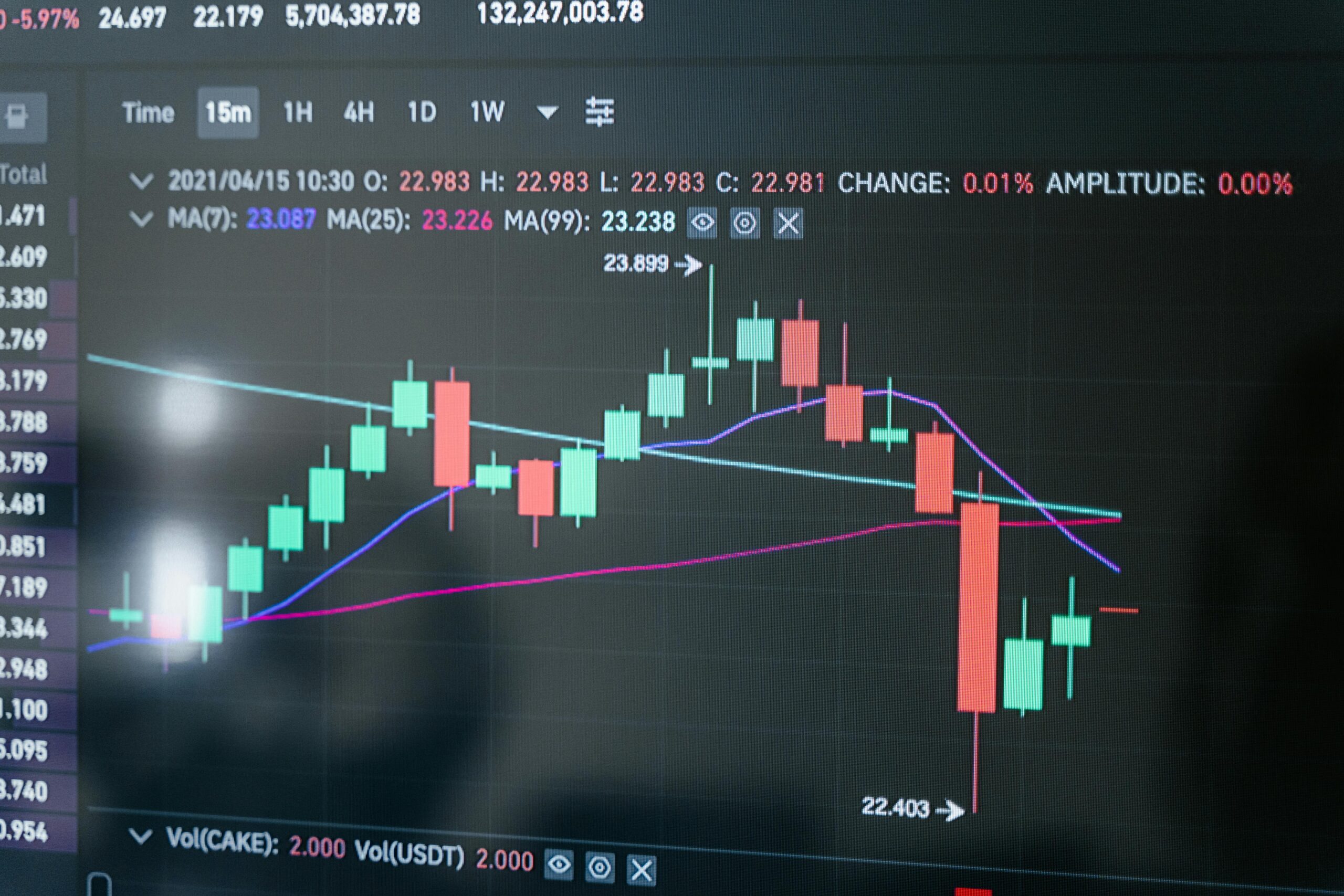
Investment decisions shape financial futures, yet cognitive biases silently sabotage even the most calculated strategies, costing investors billions annually in missed opportunities and preventable losses.

Understanding how our minds work against us in financial markets represents the difference between mediocre returns and exceptional wealth building. The human brain, evolved for survival rather than spreadsheets, frequently misinterprets market data through psychological filters that distort reality. Recognizing these mental blind spots transforms investment approaches from reactive gambling to strategic wealth accumulation, empowering individuals to make decisions based on evidence rather than emotion.
🧠 The Hidden Cost of Psychological Blindspots in Finance
Cognitive biases aren’t character flaws—they’re systematic patterns of deviation from rationality that affect every investor regardless of experience level. Research demonstrates that even seasoned professionals fall victim to these mental shortcuts, leading to suboptimal portfolio performance and unnecessary risk exposure. The financial industry has documented losses exceeding hundreds of billions attributed directly to bias-driven decision-making.
These psychological tendencies operate beneath conscious awareness, making them particularly dangerous. Investors believe they’re making logical choices while their brains process information through distorted lenses. The first step toward smarter investments involves acknowledging that bias detection isn’t about intelligence—it’s about understanding human neurology and its limitations when confronted with complex financial data.
The Confirmation Bias Trap
Confirmation bias leads investors to seek information supporting existing beliefs while dismissing contradictory evidence. Someone bullish on tech stocks unconsciously filters news, remembering positive earnings reports while forgetting regulatory challenges. This selective attention creates echo chambers where investors reinforce incorrect assumptions, building positions based on incomplete analysis.
Breaking free requires deliberate exposure to opposing viewpoints. Successful investors actively search for reasons their thesis might fail, treating contradictory data as valuable rather than threatening. This counterintuitive approach strengthens decision quality by forcing comprehensive evaluation before capital commitment.
Recency Bias and Market Timing Disasters
Recent events disproportionately influence perception, causing investors to extrapolate short-term trends indefinitely. After market rallies, optimism peaks and caution disappears. Following crashes, fear dominates even when valuations become attractive. This backward-looking approach guarantees buying high and selling low—the inverse of profitable investing.
Countering recency bias demands historical perspective. Markets operate in cycles spanning decades, not months. Studying past market environments reveals that current conditions, however dramatic they feel, represent normal variations within broader patterns. This context prevents panic selling during corrections and excessive risk-taking during euphoric phases.
📊 Building a Bias-Resistant Investment Framework
Creating systems that minimize psychological interference starts with acknowledging that willpower alone won’t overcome bias. Instead, investors need structured processes that inject objectivity into decision-making. These frameworks act as guardrails, preventing emotional detours during market turbulence when cognitive errors multiply.
The most effective approaches combine predetermined rules with regular accountability mechanisms. Writing investment theses before purchasing assets, establishing clear exit criteria regardless of subsequent attachment, and scheduling periodic portfolio reviews create structure that disciplines natural impulses toward impulsive action.
Pre-Commitment Strategies That Work
Pre-commitment involves making decisions about future actions before emotions intensify. Setting stop-loss orders when initiating positions removes the need for emotional discipline during downturns. Automatic rebalancing schedules maintain target allocations without requiring constant attention or willpower.
These mechanical approaches feel uncomfortable initially because they remove discretion—precisely their strength. By eliminating moment-to-moment decision-making, pre-commitment strategies bypass the cognitive biases that emerge during stressful market conditions. The portfolio operates according to rational plans created during calm, objective periods.
Checklist Methodology for Investment Analysis
Professional pilots use checklists despite thousands of flight hours because critical tasks demand systematic verification regardless of experience. Investors benefit similarly from standardized evaluation frameworks that ensure comprehensive analysis before committing capital.
Effective investment checklists cover fundamental metrics, competitive positioning, management quality, valuation parameters, and risk factors. Reviewing each category systematically prevents overlooking important considerations while excitement or fear dominate thinking. The checklist doesn’t make decisions—it ensures decision-makers have considered all relevant information.
💡 Advanced Bias Detection Techniques for Sophisticated Investors
Beyond foundational strategies, sophisticated investors employ advanced techniques recognizing subtle bias manifestations. These approaches require self-awareness and honest introspection, examining not just what decisions get made but why particular options feel appealing or threatening.
Maintaining decision journals documents reasoning at investment initiation, creating accountability for future review. Months later, with outcomes known, comparing actual reasoning to results reveals recurring bias patterns unique to individual psychology. This personalized feedback loop accelerates learning impossible through general education alone.
The Outsider Test for Objectivity
Emotional investment in positions clouds judgment proportional to holding duration and personal attachment. The outsider test combats this by asking: “If I didn’t own this asset, would I buy it today at current prices?” Honest answers frequently reveal holdings maintained through inertia rather than genuine conviction.
This mental reset eliminates sunk cost fallacy—the tendency to continue investments because of past commitments rather than future prospects. Previous purchases become irrelevant; only forward-looking potential justifies continued capital allocation. Applying this test quarterly identifies positions requiring exit regardless of purchase price or previous enthusiasm.
Diversification as Bias Insurance
Diversification protects against both market risk and cognitive error. No matter how confident an analysis appears, individual judgment contains blind spots. Spreading investments across asset classes, geographies, and strategies ensures that bias-driven mistakes in one area don’t derail overall financial progress.
True diversification requires exposures to genuinely uncorrelated assets, not superficial variety. Owning fifty technology stocks isn’t diversification—it’s concentrated sector betting disguised as prudent allocation. Effective diversification includes assets that perform differently under various economic conditions, providing stability regardless of which biases might compromise specific positions.
🎯 Practical Implementation: From Theory to Financial Growth
Understanding bias intellectually differs dramatically from implementing countermeasures consistently. The gap between knowledge and action determines actual investment outcomes. Successful implementation requires starting small, building habits gradually, and accepting imperfection while pursuing continuous improvement.
Begin by selecting one bias particularly relevant to personal tendencies. Someone prone to overconfidence might implement mandatory second opinions before large purchases. An investor recognizing loss aversion might establish automatic portfolio rebalancing. Focused improvement in specific areas generates momentum for broader systematic changes.
Technology Tools for Bias Mitigation
Modern investment platforms increasingly incorporate features addressing common cognitive errors. Automated rebalancing, tax-loss harvesting, and goal-based allocation algorithms remove emotional decision-making from routine portfolio management. These technologies don’t replace human judgment—they enhance it by handling mechanical tasks susceptible to bias interference.
Performance tracking applications reveal patterns invisible during day-to-day market fluctuations. Visualizing long-term trends prevents overreaction to short-term volatility. Comparing personal returns against appropriate benchmarks provides objective feedback about strategy effectiveness, cutting through subjective narratives about investment skill.
The Role of Financial Advisors in Bias Management
Quality financial advisors function as behavioral coaches as much as investment experts. Their primary value often lies not in superior market predictions but in preventing clients from sabotaging sound strategies during emotional extremes. An advisor’s external perspective identifies blind spots invisible to individuals immersed in personal situations.
However, advisors themselves aren’t immune to biases. Effective advisory relationships include open discussions about decision-making processes, not just recommendations. Clients should understand the reasoning behind suggestions, questioning assumptions and ensuring alignment with personal goals rather than advisor incentives or biases.
🚀 Maximizing Returns Through Disciplined Decision Architecture
Long-term financial growth emerges less from brilliant individual trades than from consistently avoiding major mistakes. Bias detection creates this consistency by establishing decision frameworks resilient to psychological interference. The compounding effect of marginally better decisions across decades produces dramatically superior outcomes compared to sporadic brilliance interrupted by emotional errors.
This perspective reframes investment success as process excellence rather than outcome optimization. Markets contain irreducible uncertainty making perfect decisions impossible. However, superior processes producing good decisions reliably generate better long-term results than inconsistent approaches occasionally yielding spectacular wins followed by devastating losses.
Measuring What Matters Beyond Returns
Traditional performance metrics focus exclusively on returns, ignoring the process quality generating those results. Two investors achieving identical returns through completely different approaches face vastly different future prospects. One following disciplined, bias-aware strategies likely repeats success; another succeeding through luck or excessive risk faces eventual reckoning.
Sophisticated investors track decision quality indicators alongside financial returns. Metrics like percentage of investments following predetermined criteria, frequency of emotional override decisions, and adherence to rebalancing schedules reveal process health. Maintaining high standards across these dimensions predicts sustainable long-term performance better than recent return figures.
Creating Sustainable Investment Habits
Bias mitigation requires ongoing effort, not one-time implementation. Markets constantly evolve, presenting new psychological challenges. Personal circumstances change, introducing different emotional triggers. Sustainable investing success demands treating bias detection as permanent practice rather than temporary project.
Building this into routine creates compound benefits over time. Monthly portfolio reviews checking for bias indicators become automatic. Quarterly deep dives reassessing major positions transition from uncomfortable exercises to welcomed opportunities for improvement. Eventually, bias awareness integrates into natural thinking patterns, requiring less conscious effort while delivering better results.
🔍 Real-World Applications Across Investment Strategies
Bias detection principles apply universally regardless of specific investment approach. Value investors must guard against anchoring on purchase prices. Growth investors need protection from overoptimism about disruption narratives. Income investors require defenses against reaching for yield through excessive risk. Every strategy contains unique bias vulnerabilities demanding tailored countermeasures.
Understanding strategy-specific risks enables targeted interventions. Real estate investors combating status quo bias might establish mandatory property disposition reviews every five years. Options traders addressing overconfidence could require position sizing limits based on historical win rates rather than current conviction levels. Customization increases effectiveness by addressing actual rather than theoretical vulnerabilities.
Case Studies in Bias-Driven Disasters
Historical market episodes provide powerful lessons about bias consequences. The dot-com bubble demonstrated herding behavior and recency bias as investors extrapolated internet growth indefinitely. The 2008 financial crisis revealed authority bias and complexity aversion as sophisticated investors trusted ratings agencies over independent analysis.
These cautionary tales share common threads: intelligent people making terrible decisions under psychological pressure. No individual believed they were acting irrationally; biases made destructive choices feel prudent at the moment. Studying these failures builds immunity by demonstrating how normal human psychology generates abnormal outcomes under market stress.
⚖️ Balancing Intuition and Analysis in Modern Investing
Bias awareness doesn’t demand abandoning intuition entirely. Experienced investors develop pattern recognition delivering valuable insights unavailable through pure analysis. The goal involves distinguishing genuine expertise-based intuition from bias-contaminated impulses disguised as wisdom.
Effective integration requires testing intuitive feelings against objective frameworks. A “gut feeling” about an investment opportunity warrants exploration, but verification through systematic analysis before capital commitment. This balanced approach leverages unconscious pattern processing while maintaining safeguards against emotional reasoning masquerading as insight.
When to Trust Your Instincts
Intuition proves most reliable within domains of genuine expertise after thousands of hours processing relevant information. A commercial real estate investor might accurately sense property valuation issues before detailed analysis confirms concerns. This reflects pattern recognition from extensive experience, not mystical insight.
Conversely, intuition fails spectacularly in domains lacking experience or when strong emotions activate. Feeling certain about cryptocurrency valuations without technical understanding represents bias, not expertise. Recognizing these boundaries prevents overconfidence while preserving legitimate intuition’s benefits.

🌟 The Competitive Advantage of Bias Mastery
As markets become increasingly efficient through technology and information access, behavioral edge matters more than ever. Superior information rarely provides advantage when everyone accesses identical data instantaneously. However, consistently making better decisions with available information creates sustainable competitive advantage regardless of market evolution.
This behavioral edge compounds over time. Small improvements in decision quality generate minor advantages initially but accumulate dramatically across decades of investing. The investor making marginally better choices in 100 decisions over ten years significantly outperforms peers despite similar intelligence, resources, and information access.
Mastering bias detection transforms investing from competition against markets into competition against human nature. This challenge never disappears but becomes manageable through awareness, systems, and discipline. The financial growth resulting from this mastery represents not just monetary gains but genuine self-improvement applicable far beyond investment portfolios.
The journey toward bias-aware investing begins with single steps: acknowledging vulnerabilities, implementing one systematic improvement, and committing to continuous learning. These modest actions initiate transformations producing remarkable long-term results, unlocking investment potential previously constrained by invisible psychological limitations.