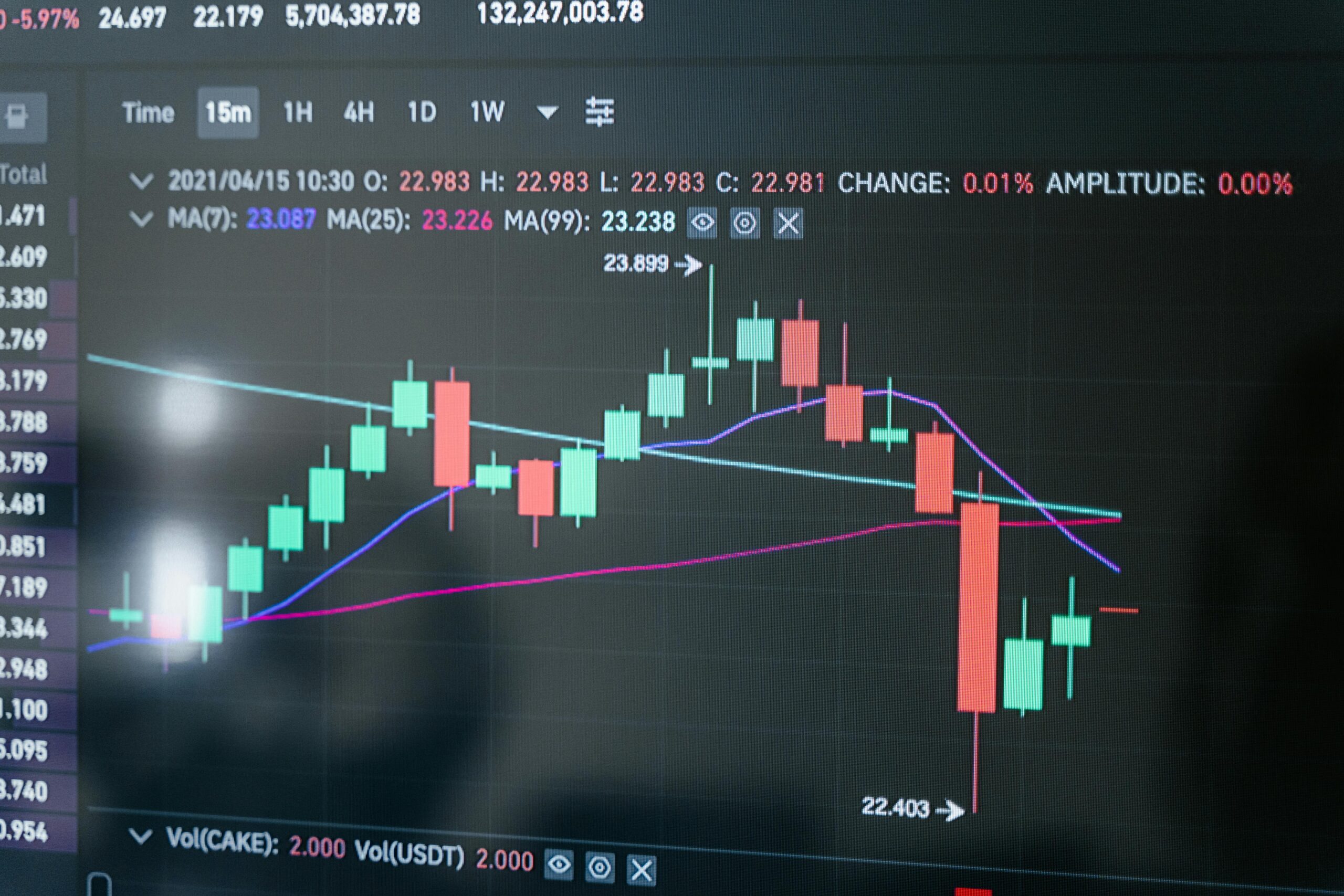
The financial landscape is evolving at an unprecedented pace, and those who harness the power of predictive analytics are positioned to thrive in this dynamic environment.

In today’s data-driven world, understanding market trends is no longer optional—it’s essential for anyone serious about achieving financial success. Whether you’re an individual investor, a financial analyst, or a business leader, the ability to anticipate market movements can be the difference between substantial gains and significant losses. Predictive analytics has emerged as a game-changing tool that transforms raw data into actionable insights, enabling professionals and enthusiasts alike to make informed decisions with greater confidence.
🔍 Understanding the Foundation of Predictive Analytics in Finance
Predictive analytics represents a sophisticated blend of statistics, machine learning, and data mining techniques designed to forecast future outcomes based on historical data. In the financial sector, this approach has revolutionized how we interpret market signals and position ourselves for upcoming opportunities.
The core principle behind predictive analytics is identifying patterns within vast datasets that human analysts might overlook. These patterns often reveal correlations between various market indicators, economic factors, and behavioral trends that collectively paint a picture of probable future scenarios.
Traditional market analysis relied heavily on fundamental and technical analysis performed manually by experts. While these methods remain valuable, predictive analytics augments human expertise with computational power capable of processing millions of data points simultaneously. This combination creates a synergy where human intuition meets algorithmic precision.
The Data Revolution in Financial Markets
The explosion of available financial data has created both opportunities and challenges. Stock prices, trading volumes, social media sentiment, economic indicators, corporate earnings reports, and geopolitical events all contribute to an overwhelming information ecosystem. Predictive analytics tools filter this noise, extracting meaningful signals that inform strategic decisions.
Modern predictive models can analyze structured data like price movements and unstructured data such as news articles or social media posts. This comprehensive approach provides a more holistic view of market conditions than any single data source could offer independently.
📊 Key Components of Effective Market Prediction Systems
Building a robust predictive analytics framework requires several interconnected components working harmoniously. Understanding these elements helps investors and analysts appreciate both the capabilities and limitations of forecasting systems.
Data Collection and Quality Assurance
The foundation of any predictive model is quality data. Garbage in, garbage out—this principle is especially true in financial forecasting. Successful systems incorporate data from multiple reliable sources, ensuring accuracy, consistency, and timeliness.
Data quality involves more than just accuracy. It includes completeness, relevance, and appropriate frequency of updates. Real-time data feeds for active trading strategies differ significantly from historical datasets used for long-term investment planning.
Feature Engineering and Variable Selection
Not all data points carry equal predictive value. Feature engineering is the process of identifying which variables most significantly influence market movements. This might include technical indicators like moving averages, fundamental metrics like price-to-earnings ratios, or macroeconomic factors like interest rates and inflation.
Advanced systems employ dimensionality reduction techniques to focus on the most impactful variables while eliminating redundant or misleading information. This refinement process improves both accuracy and computational efficiency.
Algorithm Selection and Model Training
Various algorithms serve different predictive purposes. Linear regression models work well for identifying straightforward relationships, while neural networks excel at detecting complex, non-linear patterns. Decision trees provide interpretable results, and ensemble methods combine multiple approaches for enhanced accuracy.
The training process involves feeding historical data to these algorithms, allowing them to learn patterns and relationships. Proper model validation using separate testing datasets ensures that predictions generalize well to unseen future data rather than simply memorizing past patterns.
💡 Practical Applications Across Investment Strategies
Predictive analytics isn’t confined to a single investment approach—it enhances virtually every financial strategy from day trading to long-term wealth accumulation.
Short-Term Trading and Day Trading
For active traders, predictive analytics provides real-time insights into probable price movements within minutes or hours. Algorithms can detect emerging patterns faster than human traders, generating signals for entry and exit points.
High-frequency trading firms have long employed sophisticated predictive models, but today’s technology democratizes these capabilities. Retail traders can access platforms incorporating machine learning algorithms that identify opportunities across multiple securities simultaneously.
Portfolio Optimization and Asset Allocation
Long-term investors benefit from predictive analytics through improved portfolio construction. Models can forecast expected returns, volatility, and correlations between assets, enabling optimized diversification strategies that balance risk and return according to individual preferences.
Rebalancing decisions become more strategic when informed by predictions about which asset classes are likely to outperform or underperform in upcoming periods. This proactive approach contrasts with reactive strategies that simply respond to market movements after they occur.
Risk Management and Downside Protection
Perhaps the most valuable application of predictive analytics is identifying potential risks before they materialize. Early warning systems can detect deteriorating market conditions, elevated volatility, or correlation breakdowns that signal increased portfolio vulnerability.
Investors can implement protective measures such as hedging strategies, position sizing adjustments, or tactical asset reallocation based on predicted risk scenarios. This proactive risk management often prevents significant losses during market downturns.
🚀 Technologies Powering Modern Financial Predictions
The technological infrastructure supporting predictive analytics has advanced dramatically, making sophisticated forecasting accessible beyond institutional investors.
Machine Learning and Artificial Intelligence
Machine learning algorithms continuously improve their predictions by learning from new data without explicit reprogramming. This adaptive capability is crucial in financial markets where relationships between variables evolve over time.
Deep learning neural networks have demonstrated remarkable ability to process complex, multi-dimensional financial data. These systems can identify subtle patterns in price movements, order flow, and market microstructure that traditional analysis misses.
Natural Language Processing for Sentiment Analysis
Markets don’t respond only to numerical data—investor sentiment drives significant price movements. Natural language processing (NLP) technologies analyze news articles, earnings call transcripts, social media posts, and analyst reports to gauge market sentiment.
Sentiment indicators derived from textual data complement traditional technical and fundamental analysis, providing additional context for market movements. Sudden shifts in sentiment often precede significant price changes, offering valuable predictive signals.
Cloud Computing and Big Data Infrastructure
The computational requirements for processing financial data at scale necessitate robust infrastructure. Cloud computing platforms provide scalable resources that adjust to analytical demands, making enterprise-grade capabilities available to individual users.
Big data technologies handle the velocity, volume, and variety of financial information, enabling real-time analysis of streaming market data alongside historical datasets. This infrastructure supports the demanding requirements of modern predictive systems.
📈 Building Your Predictive Analytics Capability
Developing proficiency with predictive analytics for financial success requires both technical knowledge and practical experience. The learning curve varies based on your starting point, but accessible resources and tools facilitate this journey.
Educational Foundations
Begin with fundamental concepts in statistics, probability, and data analysis. Understanding basic principles like correlation versus causation, statistical significance, and sampling theory provides the foundation for interpreting predictive model outputs correctly.
Progress to machine learning fundamentals, exploring supervised and unsupervised learning approaches. Numerous online courses, tutorials, and certifications cover these topics at various skill levels, from beginner to advanced.
Practical Tools and Platforms
Several programming languages and platforms support financial predictive analytics. Python has emerged as the dominant language, offering extensive libraries for data manipulation, statistical analysis, and machine learning. R remains popular for statistical modeling, while specialized platforms provide user-friendly interfaces for non-programmers.
Financial data providers offer APIs that facilitate data acquisition, while visualization tools help communicate insights effectively. Building hands-on experience with these technologies accelerates your learning and capability development.
Backtesting and Validation Strategies
Never deploy a predictive model without rigorous backtesting against historical data. This process reveals how strategies would have performed in past market conditions, including both favorable and adverse scenarios.
Proper validation includes out-of-sample testing, walk-forward analysis, and stress testing under extreme market conditions. Understanding a model’s limitations and potential failure modes is as important as appreciating its strengths.
⚠️ Common Pitfalls and How to Avoid Them
Predictive analytics offers tremendous potential, but several common mistakes can undermine results or lead to false confidence in flawed models.
Overfitting and Model Complexity
Complex models that perfectly fit historical data often fail dramatically when applied to future markets. Overfitting occurs when algorithms memorize past patterns rather than learning generalizable relationships.
Maintain appropriate model complexity relative to available data. Simpler models with fewer parameters often provide more robust predictions than elaborate systems that capture historical noise rather than true signals.
Survivorship Bias and Data Quality Issues
Historical datasets often exclude failed companies or delisted securities, creating survivorship bias that inflates apparent historical returns. This distortion leads to unrealistic expectations when models are applied to current markets containing both winners and losers.
Ensure datasets include all securities that existed during historical periods, not just those that survived until present day. Similarly, verify data accuracy and handle missing values appropriately rather than ignoring problematic data points.
Ignoring Transaction Costs and Market Impact
Theoretical models often assume frictionless trading without costs or market impact. Reality includes commissions, bid-ask spreads, slippage, and the price impact of large orders. These factors can transform apparently profitable strategies into money-losing propositions.
Incorporate realistic transaction cost assumptions into backtesting and live trading. Factor in your typical order sizes relative to market liquidity when assessing strategy viability.
🌐 The Future Landscape of Financial Prediction
Predictive analytics continues evolving rapidly, with emerging technologies and methodologies expanding what’s possible in market forecasting.
Quantum Computing and Advanced Algorithms
Quantum computers promise exponential increases in computational power for certain types of problems. Portfolio optimization and risk modeling could benefit tremendously from quantum algorithms capable of evaluating countless scenarios simultaneously.
While practical quantum computing for finance remains emerging, research continues advancing toward applications that could revolutionize predictive capabilities beyond current limitations.
Alternative Data Sources
Predictive models increasingly incorporate non-traditional data sources like satellite imagery, credit card transactions, web traffic patterns, and supply chain data. These alternative datasets provide unique insights unavailable through conventional financial data.
Retail foot traffic data can predict earnings before official announcements. Shipping data reveals supply chain dynamics affecting commodity prices. Social media activity indicates emerging consumer trends. Integrating these diverse sources creates informational advantages.
Democratization and Accessibility
Advanced predictive capabilities once exclusive to institutional investors are becoming accessible to individual traders and smaller firms. User-friendly platforms, affordable data subscriptions, and cloud-based analytical tools level the playing field.
This democratization doesn’t eliminate the edge that expertise provides, but it does allow dedicated individuals to compete more effectively against larger players.
🎯 Implementing Your Predictive Strategy for Maximum Impact
Converting theoretical knowledge into practical financial success requires disciplined implementation and continuous refinement of your predictive approach.
Start Small and Scale Gradually
Begin with limited capital exposure while validating your predictive models in live markets. Paper trading or small position sizes allow you to gain confidence and identify issues without risking substantial capital.
As models demonstrate consistent performance, gradually increase position sizes while maintaining appropriate risk management. This measured approach builds both your financial resources and psychological confidence.
Continuous Learning and Model Refinement
Financial markets evolve constantly, requiring ongoing model updates and learning. Regularly review performance, identify prediction errors, and investigate why models succeeded or failed in specific situations.
Stay informed about new methodologies, data sources, and technologies. The competitive landscape of financial prediction rewards those who continuously improve their capabilities rather than relying on static approaches.
Combining Human Judgment with Algorithmic Insights
The most successful approach combines predictive analytics with human expertise. Algorithms excel at processing vast data quantities and identifying patterns, while humans provide contextual understanding, intuition, and judgment about exceptional circumstances.
Use predictive models as decision support tools rather than fully automated systems. Review algorithmic recommendations, apply your market understanding, and make final decisions that incorporate both quantitative signals and qualitative considerations.
💼 Measuring Success Beyond Simple Returns
Evaluating predictive analytics effectiveness requires sophisticated metrics beyond simple profit and loss.
Risk-adjusted returns provide better performance measures than raw returns alone. Metrics like the Sharpe ratio, Sortino ratio, and maximum drawdown reveal whether returns adequately compensate for risks taken.
Prediction accuracy metrics such as precision, recall, and F1 scores quantify how well models identify opportunities versus generating false signals. Understanding these trade-offs helps optimize systems for your specific objectives.
Consistency matters as much as magnitude. Models delivering steady, reliable predictions provide more value than those with occasional spectacular successes interspersed with frequent failures.

🔐 Embracing the Predictive Advantage Responsibly
As you develop predictive analytics capabilities, remember that these powerful tools come with responsibilities. Markets serve important economic functions beyond generating trading profits, and maintaining market integrity benefits all participants.
Avoid strategies that manipulate markets or exploit informational advantages obtained through questionable means. Sustainable financial success comes from adding genuine value through better information processing and risk assessment, not from gaming systems or exploiting others.
The journey toward mastering market trends through predictive analytics is ongoing rather than destination-oriented. Markets continuously present new challenges and opportunities, requiring perpetual learning and adaptation. Those who embrace this reality and commit to continuous improvement position themselves for long-term financial success in an increasingly data-driven world.
The convergence of accessible technology, abundant data, and sophisticated analytical methods has created unprecedented opportunities for individuals willing to invest time in developing these capabilities. Your financial future can be shaped not by reacting to market movements, but by anticipating them through the strategic application of predictive analytics.