
The cryptocurrency market moves fast, and staying ahead requires more than intuition. On-chain analytics transforms raw blockchain data into actionable intelligence, giving investors a competitive edge in an increasingly complex digital asset landscape.

Traditional market analysis often falls short in the crypto space because it relies on delayed information and centralized data sources. On-chain analytics provides real-time visibility into actual blockchain activity, revealing patterns that price charts alone cannot capture. This paradigm shift is fundamentally changing how sophisticated investors approach cryptocurrency markets.
🔍 Understanding the Foundation of On-Chain Analytics
On-chain analytics examines data recorded directly on blockchain networks, offering unprecedented transparency into market dynamics. Every transaction, wallet movement, and smart contract interaction leaves a permanent, verifiable footprint that analysts can study to identify emerging trends before they become obvious to the broader market.
Unlike traditional financial markets where information asymmetry favors institutional players, blockchain technology democratizes access to market data. Any participant can theoretically access the same raw information, though extracting meaningful insights requires specialized tools and analytical frameworks.
The power of on-chain data lies in its immutability and completeness. While centralized exchanges can experience outages or manipulate reported volumes, blockchain records provide an objective source of truth about actual economic activity occurring within cryptocurrency networks.
Key Metrics That Drive Investment Decisions
Active addresses represent one of the most fundamental on-chain metrics, measuring the number of unique wallets participating in network activity. Growing active addresses typically indicate increasing adoption and network health, while declining numbers may signal waning interest or an impending market correction.
Transaction volume reveals the total value being transferred across a network, providing insights into economic throughput and utility. High transaction volumes with low active addresses might indicate whale activity or exchange movements, while broad-based volume growth across many addresses suggests genuine adoption.
Exchange flows track the movement of cryptocurrencies between personal wallets and trading platforms. Large inflows to exchanges often precede selling pressure, as investors position assets for liquidation. Conversely, substantial outflows suggest accumulation behavior, with holders moving assets to cold storage for long-term holding.
💡 Transforming Raw Data Into Strategic Insights
The challenge isn’t accessing blockchain data—it’s interpreting millions of transactions to identify actionable patterns. Advanced on-chain analytics platforms aggregate this information, applying statistical models and machine learning algorithms to surface meaningful trends that human analysts might miss.
Network value to transactions (NVT) ratio functions similarly to the price-to-earnings ratio in equity markets. This metric compares market capitalization to transaction volume, helping investors assess whether a cryptocurrency is overvalued or undervalued relative to its actual usage. High NVT ratios may indicate speculative bubbles, while low ratios could signal undervaluation.
Holder composition analysis segments wallet addresses by balance size and holding duration, distinguishing between long-term holders, short-term speculators, and whales. Understanding these cohorts’ behavior provides crucial context for price movements. When long-term holders begin distributing, it often signals market tops, while accumulation by these sophisticated players may indicate bottoming formations.
Identifying Whale Movements and Smart Money
Large holders, commonly called whales, exert disproportionate influence on cryptocurrency markets. Tracking their activity offers valuable intelligence about potential market direction. On-chain analytics can identify when whales accumulate during price dips or distribute during rallies, providing early signals for strategic position adjustments.
Smart money tracking extends beyond simple whale watching to identify addresses associated with venture capital firms, market makers, and historically successful traders. These entities often possess superior information and analytical capabilities, making their movements worthy of attention.
However, interpreting whale behavior requires nuance. Not all large transactions indicate market sentiment—some represent operational movements between wallets, exchange maintenance, or over-the-counter settlements that don’t directly impact spot markets.
📊 Advanced On-Chain Indicators for Market Timing
The spent output profit ratio (SOPR) measures whether investors are selling at a profit or loss by analyzing the difference between purchase and sale prices for moved coins. SOPR values above one indicate profit-taking, while values below one suggest capitulation selling. Extreme SOPR readings often coincide with market turning points.
Reserve risk combines price with holder confidence to identify optimal entry and exit points. This indicator reaches low values when price is low but holder conviction remains high—historically attractive accumulation zones. Conversely, high reserve risk occurs when prices surge but holders show signs of distribution.
The Puell Multiple examines miner revenue relative to historical averages, providing insights into selling pressure from network validators who must liquidate holdings to cover operational expenses. When miner revenue drops significantly below the 365-day average, it often corresponds with market bottoms as weak miners capitulate.
Evaluating Network Growth and Adoption Metrics
Metcalfe’s Law suggests that a network’s value grows proportionally to the square of its users. Applying this principle to blockchain networks, analysts compare market capitalization to active address growth, identifying networks whose prices outpace or lag fundamental user adoption.
Daily active addresses (DAA) divergence compares price movements to user growth, highlighting when assets become disconnected from their fundamental usage. Sustained price increases without corresponding DAA growth may indicate unsustainable speculation, while stagnant prices alongside growing DAA suggest accumulation opportunities.
Smart contract interactions provide specific insights for blockchain platforms like Ethereum, measuring actual utility beyond simple value transfer. Growing decentralized finance (DeFi) activity, non-fungible token (NFT) transactions, and dApp usage demonstrate real-world applications driving network value.
🎯 Practical Applications for Investment Strategy
Momentum traders can leverage on-chain analytics to confirm price breakouts with fundamental validation. When technical patterns align with favorable on-chain signals—such as increasing accumulation, growing active addresses, or declining exchange reserves—the probability of sustained moves improves significantly.
Value investors employ on-chain metrics to identify accumulation zones where smart money builds positions while retail sentiment remains pessimistic. Historical analysis reveals that periods of maximum fear, marked by high exchange inflows and panic selling, often precede significant recoveries.
Risk management benefits tremendously from on-chain intelligence. Early warning signals like increasing exchange deposits from long-term holder addresses, declining miner balances, or extreme profit-taking ratios can prompt position reduction before major corrections materialize.
Building a Comprehensive Analytical Framework
Effective on-chain analysis requires combining multiple indicators rather than relying on single metrics. Creating a dashboard that monitors key signals across various categories—network health, holder behavior, exchange flows, and mining economics—provides a holistic view of market conditions.
Context matters immensely when interpreting on-chain data. The same metric reading may carry different implications depending on broader market conditions, regulatory developments, or technological upgrades. Successful analysts integrate on-chain intelligence with traditional technical analysis, sentiment indicators, and macroeconomic factors.
Backtesting on-chain strategies against historical data helps validate analytical approaches before committing capital. Many patterns that appear predictive in limited timeframes fail when tested across complete market cycles, emphasizing the importance of rigorous methodology.
⚙️ Tools and Platforms for On-Chain Analysis
Professional-grade analytics platforms aggregate blockchain data and present it through intuitive visualizations that make complex information accessible. These tools range from free resources offering basic metrics to enterprise solutions providing advanced modeling capabilities, custom alerts, and institutional-quality research.
Glassnode has established itself as a leading provider of on-chain intelligence, offering comprehensive metrics across major cryptocurrencies. The platform’s studio feature allows users to create custom charts combining multiple indicators, while their insights blog provides educational context for interpreting market conditions.
Santiment specializes in social analytics alongside traditional on-chain metrics, measuring developer activity, social media sentiment, and crowd psychology. This multi-dimensional approach helps investors gauge market positioning and identify contrarian opportunities when sentiment diverges from fundamentals.
Leveraging API Access for Custom Analysis
Advanced users can access raw blockchain data through APIs, building proprietary analytical models tailored to specific investment strategies. This approach requires technical expertise but offers maximum flexibility for testing unique hypotheses and developing competitive advantages.
Open-source blockchain explorers provide free access to transaction data, though extracting insights requires significant data science capabilities. Python libraries like Web3.py facilitate programmatic blockchain interaction, enabling automated data collection and analysis workflows.
Cloud-based blockchain indexing services offer structured data feeds that simplify analysis compared to parsing raw blockchain nodes. These services handle the infrastructure complexity, allowing analysts to focus on interpretation rather than data engineering.
🚀 Emerging Trends in On-Chain Analytics
Machine learning applications are advancing on-chain analytics beyond simple indicator tracking. Neural networks trained on historical blockchain data can identify subtle patterns invisible to traditional analysis, predicting market movements with increasing accuracy as training datasets expand.
Cross-chain analytics examines capital flows between different blockchain ecosystems, revealing rotation patterns as investors shift allocations across layer-1 platforms, layer-2 scaling solutions, and application-specific chains. Understanding these macro trends helps position portfolios for ecosystem-level growth waves.
Privacy-preserving blockchain technologies present new analytical challenges and opportunities. As zero-knowledge proofs and confidential transactions become more prevalent, on-chain analysis must evolve to extract insights from encrypted transaction data while respecting user privacy.
Decentralized Finance (DeFi) Analytics
DeFi protocols generate rich on-chain data beyond simple transactions, including lending rates, liquidity pool compositions, governance activities, and protocol revenue. Analyzing these metrics reveals which platforms generate genuine economic value versus those relying primarily on token incentives.
Total value locked (TVL) measures capital deposited in DeFi protocols, providing insights into ecosystem growth and investor confidence. However, TVL analysis requires adjusting for token price movements and double-counting across protocols to accurately assess fundamental adoption trends.
Protocol revenue and token utility analysis determines whether DeFi tokens capture value from their underlying applications. Protocols generating substantial fee revenue that accrues to token holders demonstrate stronger fundamental value propositions than those without clear value capture mechanisms.
📈 Integrating On-Chain Insights with Traditional Analysis
The most effective investment approaches combine on-chain analytics with proven technical analysis methods. Support and resistance levels gain additional significance when aligned with on-chain accumulation zones, while technical breakouts confirmed by favorable on-chain metrics demonstrate higher probability of success.
Sentiment analysis from social media, news coverage, and options markets provides valuable context for on-chain signals. Extreme fear measured through sentiment indicators combined with on-chain accumulation by sophisticated holders often marks excellent entry points for contrarian positions.
Macroeconomic factors including monetary policy, regulatory developments, and institutional adoption influence cryptocurrency markets alongside on-chain fundamentals. Comprehensive analysis considers how these external forces interact with blockchain-native metrics to shape market trajectories.
💎 Turning Insights Into Profitable Decisions
Knowledge without action generates no returns. Developing systematic processes for translating on-chain insights into portfolio adjustments ensures consistency and removes emotional decision-making during volatile periods. Creating if-then rules based on specific on-chain triggers helps maintain discipline.
Position sizing should reflect conviction levels derived from on-chain analysis. When multiple indicators align favorably—declining exchange reserves, increasing accumulation addresses, and supportive miner economics—larger positions may be warranted. Conversely, conflicting signals suggest smaller, more cautious allocations.
Regular review and adjustment of on-chain strategies prevents stagnation as market dynamics evolve. Indicators that worked effectively during previous cycles may lose predictive power as market structure changes, requiring continuous refinement of analytical approaches.
Building Long-Term Analytical Competence
Mastering on-chain analytics requires dedication and continuous learning. The field evolves rapidly as new metrics emerge, blockchain technologies advance, and market participants adapt their behaviors. Maintaining curiosity and regularly exploring new analytical frameworks separates successful practitioners from those relying on outdated methods.
Community engagement through forums, social media, and research publications accelerates learning by exposing analysts to diverse perspectives and innovative approaches. Collaborative analysis often yields insights that individual research might miss, particularly in identifying novel patterns or interpreting ambiguous signals.
Documenting analytical decisions and outcomes creates valuable feedback loops for improvement. Maintaining a trading journal that records the on-chain rationale behind each position enables objective performance review, highlighting which analytical approaches deliver consistent results versus those requiring adjustment.
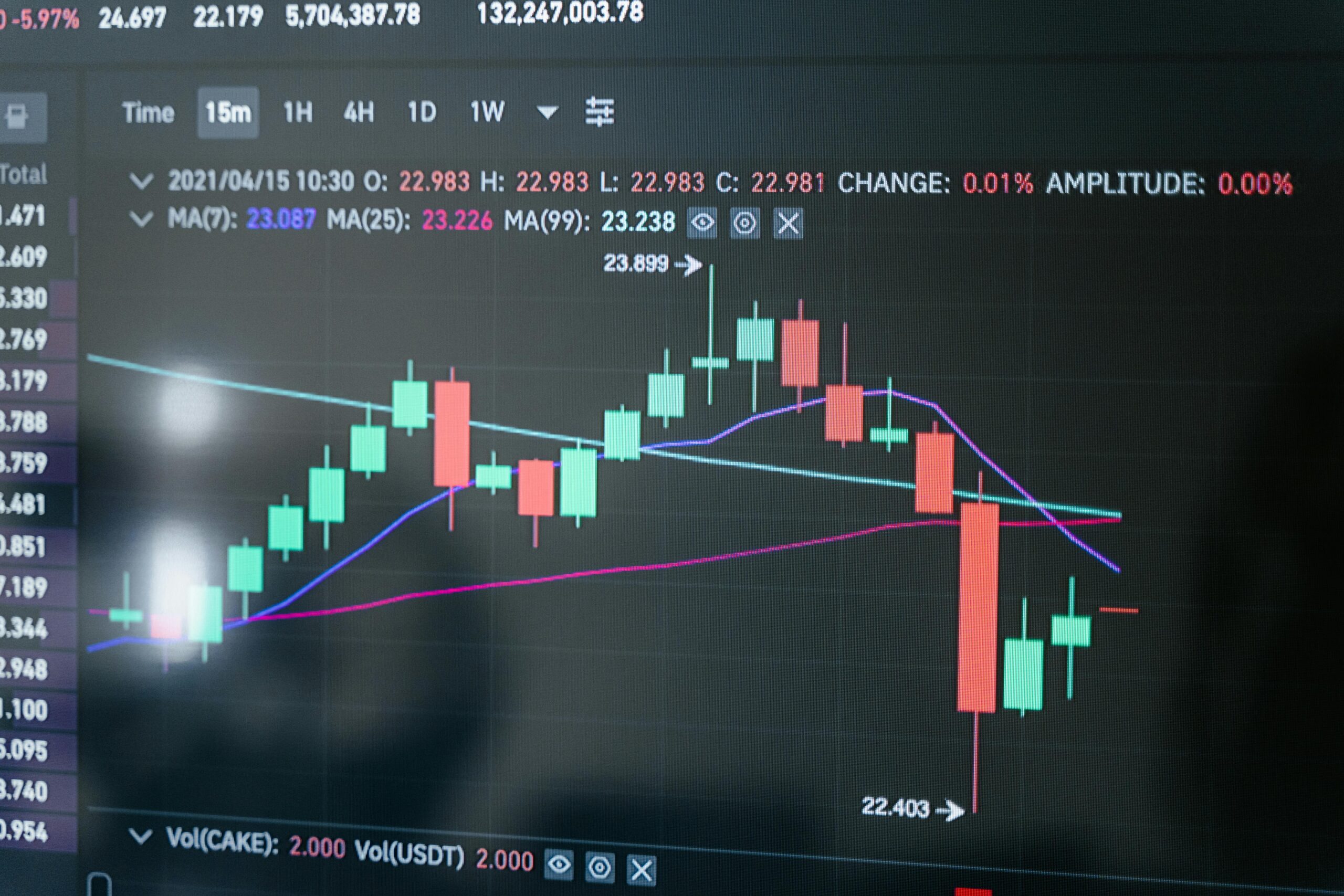
🌟 The Future of Data-Driven Cryptocurrency Investment
On-chain analytics represents a fundamental shift in how investors approach cryptocurrency markets, replacing speculation with data-driven decision-making. As blockchain technology matures and analytical tools become more sophisticated, the gap between informed and uninformed market participants will widen dramatically.
The investors who thrive in coming years will be those who master extracting actionable intelligence from blockchain data, combining quantitative rigor with qualitative understanding of cryptocurrency ecosystems. On-chain analytics provides the foundation for this approach, transforming opaque markets into transparent environments where preparation and analysis create sustainable competitive advantages.
Success in cryptocurrency investment increasingly depends on information quality rather than information speed. On-chain analytics delivers the highest quality market intelligence available, revealing fundamental trends before they manifest in price action. By committing to continuous learning and systematic application of these powerful tools, investors can navigate volatile markets with confidence and capitalize on opportunities that others overlook.